

Products and services

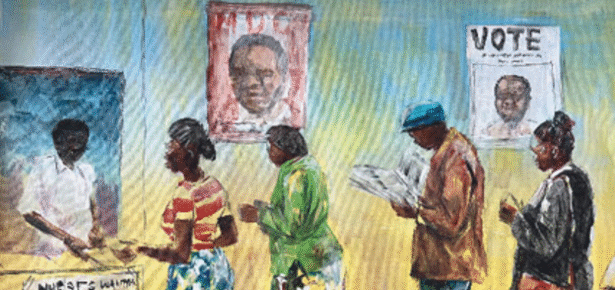
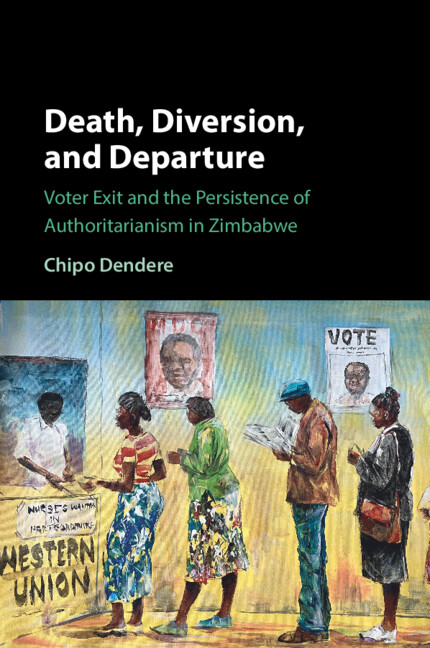
My new book, Death, Diversion, and Departure: Voter Exit and the Persistence of Authoritarianism in Zimbabwe, examines how large-scale voter exit affects the stability of authoritarian regimes. In the book, I show that both voluntary and involuntary exit create avenues for authoritarian regimes to hold onto power. When voters are absent, either because they have died or have left the country, their votes will not count on election day.
At least one in three people now lives outside their countries of birth. Many of those who live away from home were forced to leave because of poor economic and political conditions in their countries of birth. Nearly a quarter of Zimbabwe’s population has left home since the early 2000s.
Drawing on extensive ethnographic interviews with Zimbabweans in four countries, I show that their absence from home strengthened the ruling party’s hold on power. The Zimbabwe African National Union – Patriotic Front (ZANU–PF) has been in power since 1980. Until his ouster in a 2017 coup, Robert Mugabe had been the only president, and he was determined to govern until his death. Since 1980, Robert Mugabe and ZANU-PF have employed complex strategies, including violence and vote buying, to stay in power. Their brutal rule tanked the economy, forcing millions of Zimbabweans to leave home in search of protection from political violence and better economic conditions.
The majority of Zimbabwean migrants were young, urban professionals and the educated. This demographic was also most likely to support and demand political change. In 1999, workers across sectors united to form the Movement for Democratic Change (MDC). The MDC became the strongest challenge to ZANU-PF since 1980. The MDC was popular, especially among young, professional urbanites who were energized to participate in politics and vote for change. The government responded to the opposition’s growing popularity with extreme brutality. However, another development occurred: inadequate government policies resulted in economic decline and had negative impacts on the healthcare sector and all other government services. In response to these complex economic crises, voter turnout decreased. Additionally, thousands died from the HIV pandemic, which was worsened by government actions like Operation Murambustvina, an effort that destroyed clinics and healthcare centers.
The unintended consequence of voter exit was that it diminished support for the pro-democracy movement. The opposition needed every available vote to stand a chance against a regime that was using all the tools in the authoritarian toolbox for party survival, such as vote rigging and violence. The lessons from this book are relevant to current global times: whenever possible, voters must not self-exile, and their voice matters for the survival of democracy.

Chipo Dendere is an assistant professor of political Science in the Africana Studies department at Wellesley College. Her research focuses on African politics, democracy, migration...
View profile >Keep up with the latest from Cambridge University Press on our social media accounts.



Latest Comments
Have your say!