

Products and services


A lot of ethical programs are predicated on ideas of sameness and reciprocity. These programs urge us to imagine other people as similar to ourselves and to treat them accordingly. This is the essence of the biblical teaching to ‘Love thy neighbor as thyself’ and is the gist of the so-called Golden Rule: ‘Do unto others as you would have them do unto you’. However, a few philosophers have rejected this foundation. One of these is the Lithuanian-born, Jewish thinker Emmanuel Levinas (1905-1995). Levinas was adamant that regarding the other as an analog of the self is not an ethical response but a reductive one. This is not ethics so much as ‘egology’. According to Levinas, the real ground for ethical relation is not sameness but difference. If you authentically encounter the other, Levinas explains, you soon recognize that you cannot reduce her to your mental constructs or categories. She exceeds every thought you can think of her–and it is this absolute, ineradicable alterity that commands your attention and makes you ethically responsible.
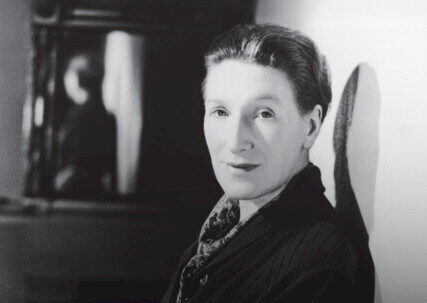
The Italian-born, feminist philosopher Adriana Cavarero (b.1947) follows Levinas in anchoring her ethics in difference. However, Cavarero sets herself apart by giving her ethics an acoustic orientation. She singles out the sound of the voice as the most fundamental manifestation of the essential alterity of the other. Due to variations in pitch, timbre, cadence, tempo, intonation, and accent, each voice is distinctive. As a result, each voice communicates what Cavarero calls ‘the true, vital, and perceptible uniqueness of the one who emits it’. To hear such a voice is to experience ineradicable difference, which has the effect of drawing you into relation and making you responsible. And all of this, Cavarero insists, is independent of any linguistic content the voice might convey. According to Cavarero, the mere sound of the voice is enough. Every ‘vibrating throat of flesh’ sounds an ethical summons prior to and apart from its verbal messaging.
In my book, Voice and Ethics in Shakespeare’s Late Plays, I consider how these ideas can illuminate Shakespeare’s dramatic art. I make the case that Cavarero’s writings, in particular, can shed light on Shakespeare’s plays because he conceives of voices in similar terms.

Several of Shakespeare’s plays, for instance, uphold the idea that voices operate as unique sonic signatures. When Romeo addresses Juliet from the shadows of her garden, she replies: ‘My ears have not yet drunk a hundred words / Of thy tongue’s uttering, yet I know the sound. / Art thou not Romeo, and a Montague?’ (Romeo and Juliet). When Gadshill challenges Poins and Falstaff on the side of a pitch-black highway, Poins exclaims, ‘Oh, ’tis our setter; I know his voice’ (1 Henry IV). When Portia approaches Jessica and Lorenzo in the dark of night, Lorenzo says, ‘That is the voice, / Or I am much deceived, of Portia’ (Merchant of Venice). And when Cassandra cries out unseen from within, Troilus reassures his companion, Priam, ”Tis our mad sister; I do know her voice’ (Troilus and Cressida). In King Lear, blind Gloucester recognizes Lear by the sound of his voice, which is also how the Bastard recognizes Hubert in King John, how Cassius recognizes Casca in Julius Caesar, how Cominius recognizes Caius Martius in Coriolanus, how Trinculo recognizes Stefano in The Tempest, and how the Duke recognizes both Isabella and Lucio in Measure for Measure. Throughout his plays, Shakespeare treats the voice as a distinctive personal identifier that sonically reveals the self to others.
Similarly, several of Shakespeare’s plays–especially the later ones–present the sound of the voice as ethically impactful, irrespective of what it says. This is certainly true in King Lear, a tragedy in which language is pushed to its breaking point. Over the course of the drama, many characters are reduced to traumatized, repetitive inarticulacy. Yet their utterances remain significant. Consider the play’s most poignant moment, when Cordelia forgives her father. She doesn’t even deliver a complete sentence. What she says–‘No cause, no cause’–is barely more than a murmur. But though her utterance is verbally spare, it is ethically abundant. Her speech, along with that of several other characters, continues to convoke and invoke, even when what is spoken sounds nonsensical, incoherent, and/or banal.Repeatedly in his late plays, Shakespeare gives mere vocality an intense ethical charge.
Voice and Ethics, then, is a book about Shakespeare and speech. However, it differs from most examinations of speech in Shakespeare by attending more to voice and vocality than to verbal meaning and linguistic content. It is less concerned with matters of semantics, stylistics, and rhetoric than it is with the sensuous, sonorous, and somatic dimensions of human speech. At the core of every chapter is the vibrating throat of flesh, expressing the alterity and uniqueness of its speaker. By attending to the ethical efficacy of the voice in Shakespeare’s late plays, Voice and Ethics contends that Shakespeare is in broad agreement with Cavarero that ‘the voice is always, irremediably relational … the voice is for the ear’.


Kent Lehnhof is Professor of English at Chapman University, where he has received the university's highest award for scholarship and its highest award for teaching. He has co-edite...
View profile >Keep up with the latest from Cambridge University Press on our social media accounts.



Latest Comments
Have your say!