

Products and services

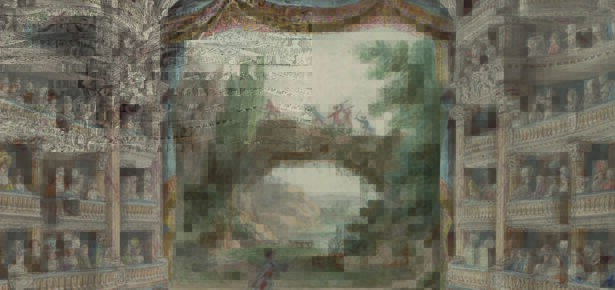
Napoleon Bonaparte: Corsican, illustrious general, First Consul, Emperor of the French, exile, prisoner. It’s quite a CV. He was also a PR expert ahead of his time, and one of his chosen media for this was the theatre. Theatre had the potential to reach thousands of spectators and, when it was reported in the press, hundreds of thousands of readers right across France and Europe. As Napoleon proclaimed in 1813 when organising a series of performances in Dresden, ‘they can only have a good effect in London and Spain, they will think we are enjoying ourselves’.
Theatre, however, was a double-edged sword for Napoleon. Yes, it could be a useful propaganda tool, but audiences could make sure it failed when he was in power. Conversely, when he was exiled, the stage became a key forum in keeping Napoleon’s memory alive.
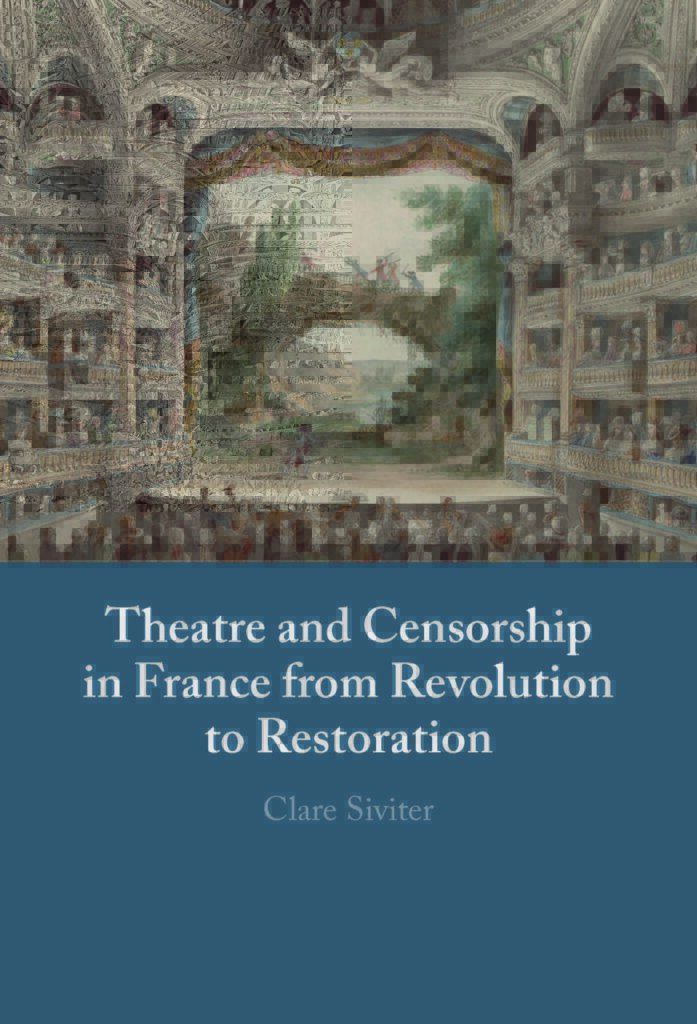
My new book explores this paradox – and others – through censorship. Censorship was part and parcel of the creative process in France for most of the period my book covers (1788-1818). Yet, after researching in archives across France, I knew censorship was not unidirectional: yes, the state could censor the stage, but so too could writers, theatres, audiences and critics. Indeed, sometimes these incidents could spill out of the theatre and onto the streets, threatening law and order.
To investigate this further, I focused on two forms of censorship: bureaucratic censorship, by the state, and what I term ‘lateral censorship’, by writers, theatre practitioners, audiences, and critics. These approaches revealed the dynamic forces at play in shaping Napoleon’s onstage image. For example, just after the coup of 18 Brumaire, which saw Bonaparte’s – as he was then – rise to power, an actor in Bordeaux appeared as the new leader of France in a play about the recent events. Braban, in the role of Bonaparte, forgot his lines after ‘We want a republic founded on liberty…’. The crowd found this most amusing – their view of France’s new ruler was clear, irrespective of what the authorities had hoped.
Conversely, the stage also helped keep Napoleon’s memory alive once he had lost power. During his reign, the actor Talma had periodically served as a metaphorical double onstage for Napoleon, incarnating great leaders and emperors. Once Napoleon had been exiled permanently to St Helena – a tiny island in the South Atlantic Ocean – audiences used Talma as an emblem of their former leader. In the tragedy Germanicus, performed in 1817, Talma performed the title role of this great Roman general who was wrongly done by. This play set off a riot where those loyal to the emperor and those in favour of the returned king clashed, spelling out onto the streets.
Staging Napoleon remained a problem whether he was in power or not; and there was no clear-cut answer about how to evoke him onstage safely, in a way where he would be warmly welcomed. This is not to say there were no propaganda plays during his reign – there were – but their success could not be guaranteed due to all the moving parts involved in making theatre, not least the role of the spectator who decided what to believe. They too could act as a censor, and it is high time their actions are better known about.

Clare Siviter is Associate Professor at the University of Bristol. She is the author of Tragedy and Nation in the Age of Napoleon (2020). She was also an AHRC/BBC New Generation Th...
View profile >Keep up with the latest from Cambridge University Press on our social media accounts.


Latest Comments
Have your say!