

Products and services

In 1947, Winston Churchill—no longer Prime Minister but still sparring from the backbenches—famously quipped that democracy is “the worst form of government except for all the others that have been tried.” What he feared most were schemes run by self‑appointed “super‑planners” who would tell everyone else what was good for them without oversight.
A year later, the Universal Declaration of Human Rights echoed that sentiment without ever using the word “democracy.” Article 21 insists that “the will of the people shall be the basis of the authority of government,” expressed through genuine, periodic, secret‑ballot elections open to all.
The twenty-first century, though, has witnessed a rise in global populism, extending from Latin America to established democracies. This trend has coincided with technological advances that have enabled nation states to use cyber-enabled attacks to attack election infrastructure, and undermine trust in democratic systems by sewing distrust through disinformation and deep fakes.
“A Republic—If You Can Keep It”
Benjamin Franklin’s warning rings louder than ever: free government lasts only as long as citizens defend it. Inequality, injustice, and racism can rot a system from within, while hostile states widen those fractures from the outside. Russia, for instance, has meddled in dozens of elections since the end of the Cold War, riding the rise of social‐media platforms to interfere in Brexit, the 2016 U.S. presidential race, and contests across Africa and Asia.
Today’s digital threats stretch far beyond stuffing ballot boxes. Vulnerabilities lurk in:
In short, democracy’s attack surface has exploded, with both established and emerging democracies around the world rushing to learn from one another and address yawning governance gaps.
Not all news is bleak. Consider Australia’s answer to repeated Chinese interference: the country officially classifies its political parties as critical infrastructure, unlocking stricter cybersecurity rules. The United States—despite hacks of both major parties—has yet to do the same. Around the world, other success stories show that paper ballots plus risk‑limiting audits work, rapid misinformation takedowns help, and cross‑border intel‑sharing among democracies raises the cost of meddling.
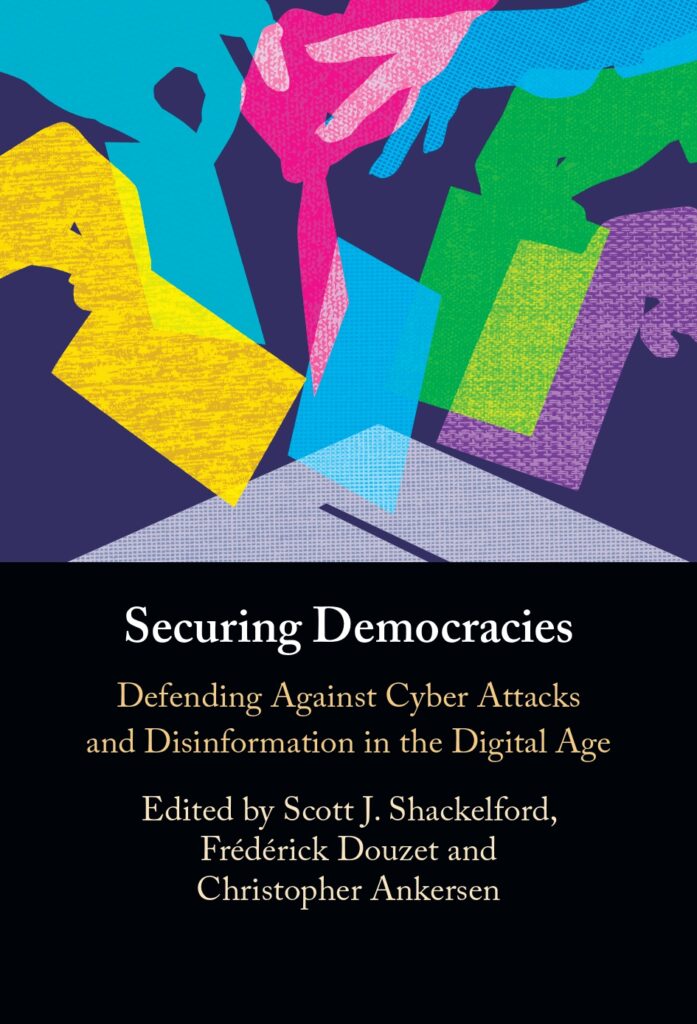
The new edited volume launching alongside this post gathers experts who tackle two fronts at once:
The takeaway is clear: securing democracy means more than safeguarding polling places. It requires multilayered policies that harden systems, build trust, and promote shared cyber norms among like‑minded nations. Above all, it requires that democracies around the world work together to combat their common foes.
Democracy’s opponents are adaptive and relentless; its defenders must be equally innovative. This book is a playbook for making democracy harder to hack—technically, politically, and psychologically. Read it, share the lessons, and help ensure Churchill’s “least‑bad” system survives at least until something better comes along.

Frédérick Douzet is Professor of Geopolitics at the University of Paris 8. She serves as Director of the French Institute of Geopolitics research team (IFG Lab) and Director of t...
View profile >Christopher Ankersen is Clinical Associate Professor of Global Affairs and Faculty Lead, Global Risk Specialization at New York University's Center for Global Affairs. He has previ...
View profile >Professor Scott J. Shackelford serves on the faculty of Indiana University, where he teaches cybersecurity, business law and sustainability, among other courses, and is a fellow at...
View profile >Keep up with the latest from Cambridge University Press on our social media accounts.


Latest Comments
Have your say!