

Products and services

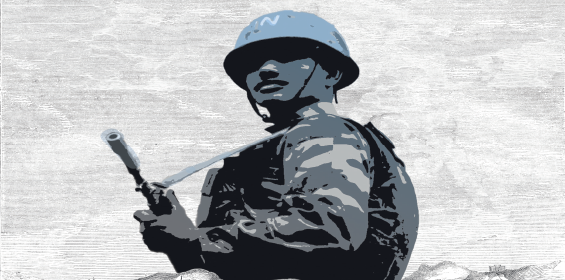
Calls to establish international administrations have been made in numerous contemporary contexts, including Afghanistan, the Congo, Haiti, Kosovo, Iraq, Liberia, Libya, Palestine, South Sudan, Syria, Timor-Leste or Yemen. More recently, they have been made in the context of the war in the Middle East (to “administer” Palestine) or in the Ukraine. Some of these projects have been translated into effective authority, others not. But it is striking to see the continuing perceived legitimacy of the arrangement to respond to contemporary issues.
In this book, I argue that the various instances of international administrations are representative of a broader agenda where international organisations play an increasing role in global governance. International administration can be understood as a manifestation of political authority by officials of an international organisation over a territory, this authority being over the legislative, executive and judicial structures. These practices of authority elicit in turn counter-claims of accountability by local actors, vying to keep in check these international governors. Sovereignty does not only manifest itself through practices of authority, but also through practices of responsibilisation and accountability. Rather than focusing solely on what is included in the mandate of peace missions for instance, I argue in favour of an approach through practices. As such, sovereignty is best understood as a set of practices, more preciselystruggles between actors vying to assert their political authority and another set ofactors striving to keep this political authority under check.
I develop this argument through an exhaustive survey of all projects of international administrations, from the League of Nations to the United Nations, focusing on how international officials have made claims to assert their political authority over specific territories and populations and reviewing all the accountability demands expressed by local actors and how these demands have shaped the future practices of international administrations. The analysis has been done through archival research in Geneva and New York, but also through interviews on the ground for more recent interventions (Kosovo, Timor-Leste and Haiti). A few interesting insights emerge from the analysis. For instance, if the scholarship tends to see the League of Nations’ administration of Danzig and the Saar Bassin as two flagship cases of international administrations – cases where “League administration, therefore, is, truly and really, international administration” to quote a very enthusiastic League of Nations official – in reality the practices of authority by international officials was quite limited. In these two cases, great power politics prohibited the League of Nations to play its full role as an international administration, limiting the practices of sovereignty displayed by international officials. Two cases are nevertheless particularly interesting in terms of political authority displayed by the League of Nations. First, in the case of the Upper Silesian regime, if the Mixed Commission was mostly deprived of political authority in the region, the Arbitral Tribunal can be seen as displaying authority over the territory. In the case of Leticia, the mission did manage the everyday life of the town of around sixty inhabitants for a while, displaying a caretaker’s role in the administration of the territory which will have echoes in future UN international administrations such as West New Guinea or Eastern Slavonia.
In the case of the United Nations, among all the cases reviewed and analysed, I specifically discuss four cases of international administration: the Congo, Kosovo, Timor-Leste and Haiti. If some of these cases have clear mandates enabling the deployment of an international administration on the ground (Kosovo and Timor-Leste), the cases of the Congo and Haiti need to be elucidated through archival work or through interviews. It is striking to note the role of the United Nations as early as the 1960s in the Congo, especially in the context of the demise of Patrice Lumumba. Similarly, the United Nations found itself at the centre of politics in contemporary Haiti, playing the role of “kingmakers” and interfering in multiple ways in local politics. The lessons of such international enterprises are humbling for international actors: rarely do these international administrations actually deliver the political goods promised. Sometimes they do however; we discuss the case of the negotiation over the Timor Gap led by the American Ambassador Peter Galbraith on behalf of the Timorese and which managed to secure very positive gains for the small island country. However, more often than not, international officials end up being the target of resistance by local actors, vying for accountability measures that international organisations tend not to be able to deliver on. This should be an important consideration to keep in mind for those voicing calls for international administrations as an answer to the current international crises, from Gaza, Haiti, Sudan, to the Ukraine.
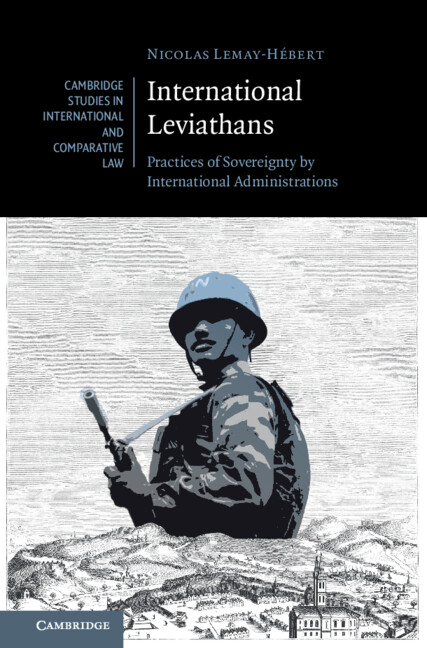

Prof. Nicolas Lemay-Hébert is a Professor of Peace and Conflict Studies and the Executive Director of the Humanitarian and Conflict Response Institute (HCRI) at the University of ...
View profile >Keep up with the latest from Cambridge University Press on our social media accounts.




Latest Comments
Have your say!