

Products and services


There is something deeply uncomfortable about admitting that you are not fully fluent in your own mother tongue. As a Mongolian born and raised in Mongolia, I grew up believing Mongolian was naturally “mine”: the language of my childhood, my homeland, my family, my memories. Yet after living in Australia for more than two decades, I have realised that language ownership is never as simple as birthright. Yes, I speak Mongolian fluently. I dream in it. I laugh in it. I carry its emotional attunes within me. But when it comes to producing formal academic Mongolian, I hesitate. I search for words. I struggle with conventions. The language that once felt entirely natural now sometimes feels distant in academic spaces because I have not lived inside those linguistic systems for many years.
At the same time, English has become the language through which I teach, publish, supervise, write grants, and navigate academia. Yet my English is also marked and shaped by my Mongolian accent, my migration history, and my lived experiences. I do not speak the “perfect” standard English celebrated in institutional spaces. So where does that leave someone like me?
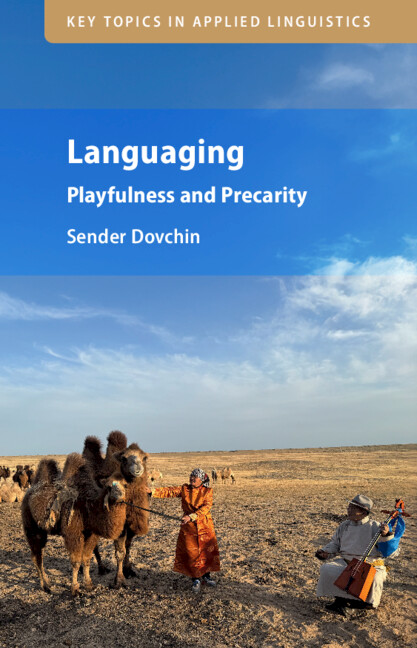
This is precisely the intellectual and personal tension explored in this book. At its heart lies a powerful challenge to one of the oldest assumptions in linguistics: the idea that languages are pure, fixed, bounded systems that people either possess correctly or incorrectly. This book asks us to rethink language entirely. Rather than viewing language as something people have, it proposes understanding language as something people do. This shift may sound subtle, but it radically changes how we understand communication, identity, migration, belonging, and even humanity itself.
For centuries, mainstream linguistics has largely treated language as a stable structure, almost like a sealed container with rules, borders, and standards. These ideas helped create notions of the “ideal native speaker,” the “standard language,” and the myth that nations naturally belong to one language. But real life does not work like that.
People constantly move between languages, accents, registers, technologies, and identities. Migrants, refugees, Indigenous peoples, international students, multilingual families: all reveal the impossibility of keeping languages neatly separated. Communication is messy, relational, emotional, embodied, and deeply tied to context.
This is where this book becomes especially compelling. It refuses the fantasy of linguistic purity. Instead, it embraces “languaging”: the idea that meaning-making is dynamic, fluid, and always emerging through social interaction. Drawing from frameworks such as translanguaging, metrolingualism, and translingual practice, the book shows how people creatively mobilise whatever linguistic resources are available to survive, connect, and belong.
The book does not romanticise multilingualism either. It recognises the inequalities embedded within language systems. Some accents are celebrated while others are mocked. Some forms of English are treated as intelligent while others are viewed as deficient. Some speakers are praised as cosmopolitan while others are told they lack proficiency. In this sense, this book is not simply about language. It is about power. Who gets to decide what counts as “good” language? Who benefits from standards? Why are some people constantly measured against linguistic ideals that no human being can fully embody? These questions matter profoundly in our contemporary world of migration, mobility, digital communication, and cultural hybridity. This book reminds us that linguistic boundaries are not natural truths but social and political constructions. Perhaps the most moving aspect of the book is its deeply human message: people are not linguistic failures because they do not fit neatly into monolingual categories. Our ways of speaking reflect our histories, movements, struggles, relationships, and lived realities.
Language, then, is not purity. It is practice. It is adaptation. It is survival. It is becoming. It is languaging.

Sender Dovchin is Professor of Applied Linguistics at Curtin University, Australia. She has been recognised three times by The Australian, Research Magazine, in 2021, 2024 and 2025...
View profile >Keep up with the latest from Cambridge University Press on our social media accounts.




Latest Comments
Have your say!