

Products and services


Each time our small ship met a big wave, a few plates and glasses crashed to the deck. We were in a storm on the North Atlantic Ocean, on a voyage from the United States to Europe. You need not fear the ocean, but you must respect it. If you are careless or just unlucky, the ocean can kill you. Thousands of people die each year in marine disasters. No such tragedy happened on this voyage. Our little ship was a cruise ship, and its captain and crew were experts who knew their jobs well. I was on the ship not as a paying passenger, but as a lecturer.
In recent years, I have been a lecturer on cruise ships in many areas of the world, often speaking on the oceanography and meteorology of the region where the voyage takes place. To obtain these opportunities, I use an agent who understands what sort of lecturer each cruise line prefers. The usual financial arrangement is that the lecturer does not receive a salary but also does not pay a fare. My agent’s fee for finding me jobs as a lecturer is always much less than the fare paid by a typical passenger. Thus, I have enjoyed being on several cruise ship voyages relatively inexpensively.
In general, a cruise ship lecturer has all the usual privileges of a paying passenger, which on the more luxurious ships will include using the ship’srestaurants and bars at no cost for the entire voyage. The speaker is often allowed to bring a guest at no cost as well, if the guest shares the speaker’s stateroom. My guest has always been my wife. The cruise lines usually poll the passengers after each voyage, asking the passengers for their opinions about the food, the staterooms, the staff, the entertainment, and, yes, the lecturers. If a lecturer does not get strongly positive reviews, that lecturer will not be invited back. Thus, the system is a meritocracy of sorts.
The captain of this particular cruise ship also gave several well-attended lectures. He spoke on different days from my lectures. He and I both lectured in the same room, and I was always in the audience for each of his lectures. I was surprised at first, because the captain spoke mainly on topics such as shipwrecks and other marine disasters. He appeared to have a detailed knowledge of virtually every major disaster at sea, not only famous ones such as the Titanic, but also many less well known tragedies.
As an experienced cruise ship lecturer, I had repeatedly been warned not to bring up unpleasant topics in my lectures, including shipwrecks, pirates, mutinies, fires at sea, and other marine disasters. My agent and numerous cruise directors and other cruise line employees had made sure that I understood the important fact that passengers on cruise ships expect to have an enjoyable time, and they do not want to be frightened or depressed.
However, the passengers on this voyage overwhelmingly told me that they liked the captain’s lectures. He emphasized that many of the routine safety precautions employed on cruise ships today, such as mandatory lifeboat drills, owed their origins to disasters occurring long ago, when these same precautions had not been taken. As the captain spoke again and again of all the mistakes in the past that had led to various disasters, the passengers on this voyage reasoned that with this knowledgable marine disaster expert in command of our ship, we were very likely to be kept safe. If an emergency happened on our voyage, this captain would know exactly what to do.
As a climate scientist and a university professor, I learned a lot from this captain. I realized that cruise ship passengers would also welcome hearing about climate change, if my lectures on it were always confined to objective and factual information based on science, and if I did not talk about politics or policies or other controversial areas. During my lectures, I always invited audience members to contact me at any time during the voyage to discuss any aspect of meteorology and oceanography. Several passengers took me up on these offers. I eventually concluded that I should not be discouraged or forbidden to speak about climate change in lectures on cruise ships. Climate change is too important to ignore. Mainstream media now frequently report on many aspects of climate change, and audiences often welcome hearing about scientific results.
For me, the key take-away message from my experience on this cruise ship was that many people want to hear about scientific findings, which are based on facts and evidence, but they do not like to hear about political topics or about disputes on what should be done about climate change. A lecturer should not speak on issues involving personal opinions, risk tolerance, or views on the role of governments. I made sure to avoid these controversial areas. I kept to the science in all my lectures, and that principle seemed to meet with widespread approval.
I thought of my cruise ship lecturing experience often while writing Climate Change Science: An Essential Reader (Cambridge University Press, 2026). I have tried to make it a book that clearly and objectively explains scientific information, based on facts and evidence. An early example, described in my book, is the research carried out and reported in 1861 by the Irish physicist John Tyndall. He carried out extensive laboratory experiments and was the first scientist to discover which atmospheric gases cause the greenhouse effect in the Earth’s atmosphere. Everybody is entitled to his own opinions, but not to his own facts. Discovering the facts about climate change is the role of science. In this way, sound science can inform the public and policymakers and can contribute to the creation of wise policy.
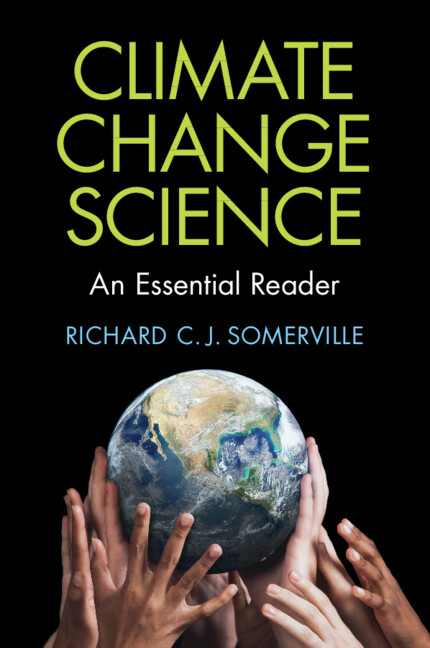
Title: Climate Change Science
ISBN: 9781009691154
Author: Professor Richard C. J. Somerville
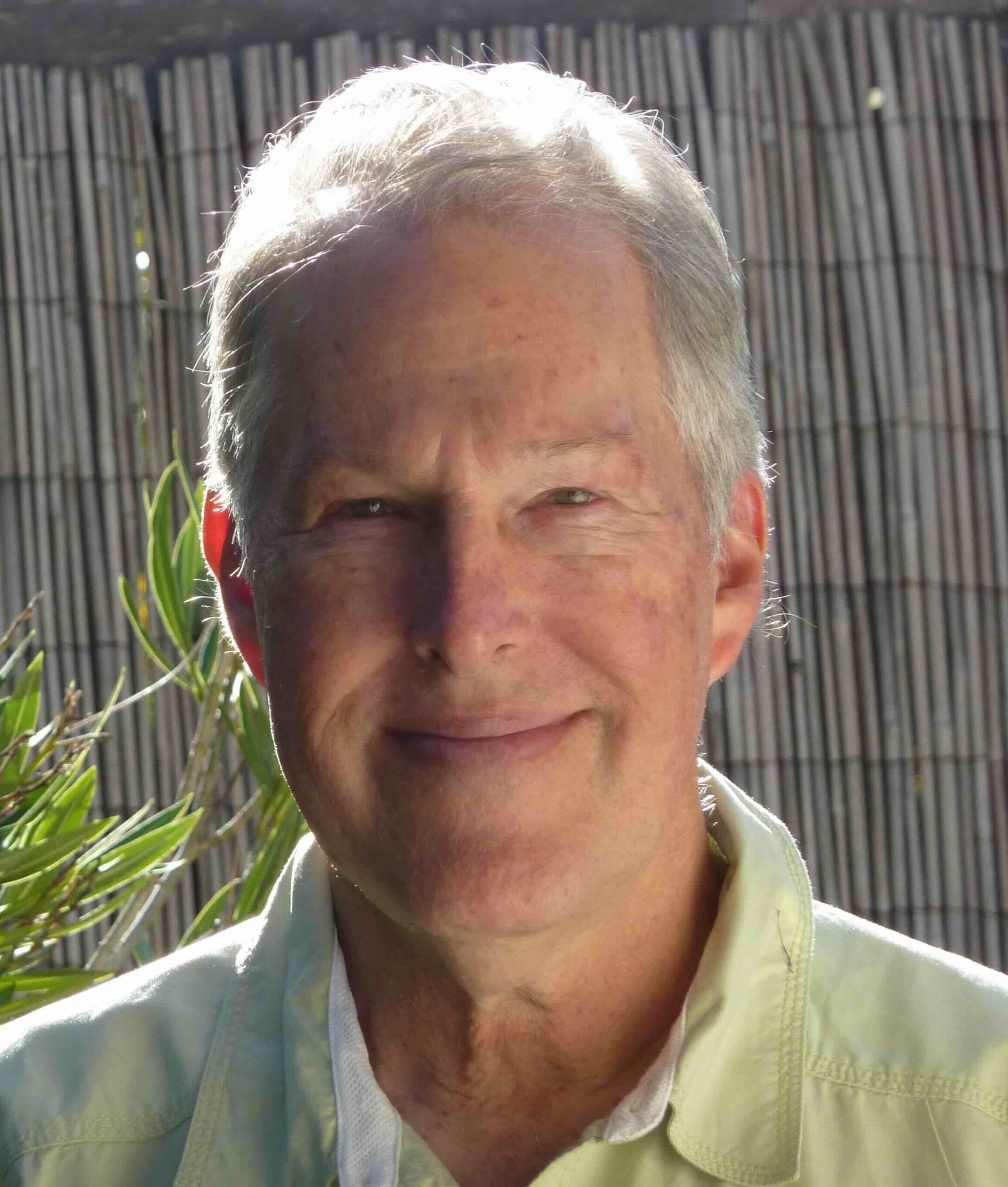
Richard C. J. Somerville is Distinguished Professor Emeritus at Scripps Institution of Oceanography, University of California, San Diego. He is a fellow of three scientific societi...
View profile >Keep up with the latest from Cambridge University Press on our social media accounts.



Latest Comments
Have your say!