

Products and services


‘You have to understand the context’ is perhaps one of the most common intellectual reflexes of our time. Historians insist on historical context, literary critics on textual context, psychologists on environmental context. Across the humanities and social sciences, we’ve become thoroughly contextualist in our thinking. Yet we rarely pause to ask where this commitment came from or what it really means.
Contextualism emerged as a distinct intellectual trend around the end of the nineteenth century. By the mid-twentieth century it had come to dominate a range of domains of academic thought. But the story of how we came to think this way – of why context became our fundamental analytical tool – is exemplified in the twin intellectual journeys of one particular philosopher and one particular discipline: Ludwig Wittgenstein and anthropology.
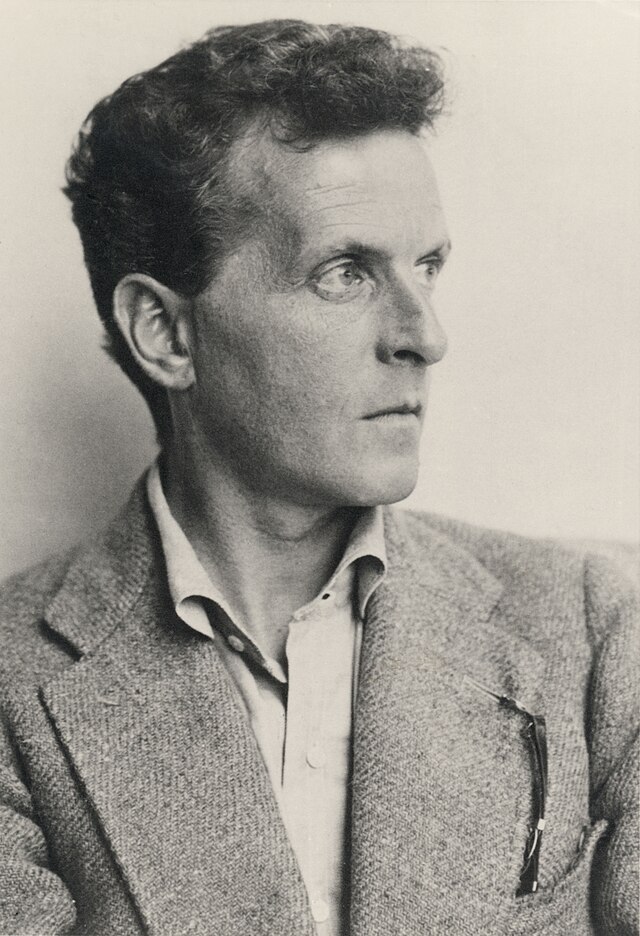
Ask any anthropologist what makes their discipline distinctive and they’ll likely mention ‘context’. We study beliefs, practices, and institutions ‘in context’. It’s arguably anthropology’s most fundamental commitment, so basic that we often don’t question its origins. But anthropology’s contextualism has a surprising philosophical genealogy.
The connection begins in the early twentieth century, when figures at Cambridge like W. H. R. Rivers and Alfred Haddon were establishing the contextualist norms of modern ethnographic fieldwork. At precisely this moment, Wittgenstein was assisting one of their collaborators, the psychologist and ethnographer Charles Myers, with experiments on the effects of context on the perception of musical rhythm. The parallel isn’t coincidental: ideas about context were circulating through Cambridge and other intellectual centres of the period, moving between philosophy and the emerging human sciences in ways that shaped both.
As Wittgenstein’s philosophy evolved – as he moved away from his early logical atomism toward his later emphasis on ‘forms of life’ and language-games – anthropological thinking about context transformed in strikingly similar ways. In a chapter of a book we know Wittgenstein read in 1923, Malinowski coined the phrase ‘context of situation’ to describe the phenomena surrounding a linguistic utterance that must be understood for the utterance to make sense: as he put it, anticipating arguments Wittgenstein would make later, ‘the meaning of a word must always be gathered…from an analysis of its functions, with reference to the given culture’. Later still, when Clifford Geertz developed ‘thick description’ and insisted on understanding meaning through webs of significance, he was working in a thoroughly Wittgensteinian idiom, as he himself acknowledged when he called Wittgenstein his ‘master’.
Why does this matter beyond anthropology? Because if contextualism dominates contemporary thought, we need to understand its philosophical foundations and limitations. When we invoke ‘context’, are we talking about a logical structure, a social system, a cultural web of meaning, or a form of life? Do we even know what our models of context are? Anthropology offers a particularly revealing case study precisely because it’s been so committed to contextualism for so long. Its historical connections with Wittgenstein illuminate assumptions that shape contextual thinking across disciplines.
Context isn’t a neutral tool. It’s a theoretical commitment that shapes what we see and how we interpret it. The question isn’t whether we should be Wittgensteinian about context or not. It’s whether we want to use these philosophical tools consciously and critically, or continue borrowing ideas we’ve forgotten we borrowed in the first place.
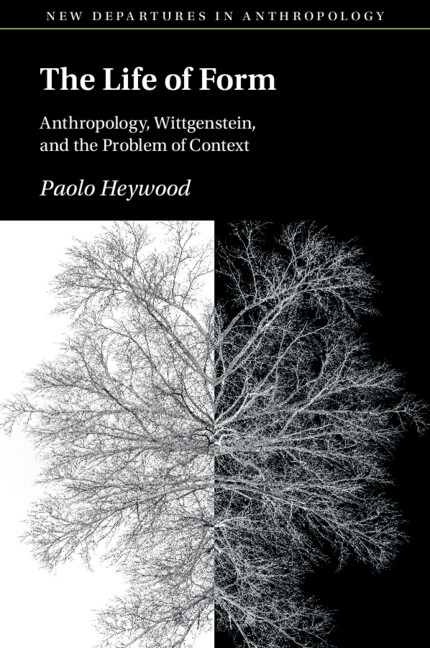

Paolo Heywood is Associate Professor of Anthropology at Durham University, UK. He is the author of two monographs (After Difference, 2018; Burying Mussolini, 2024) and the editor o...
View profile >Keep up with the latest from Cambridge University Press on our social media accounts.



Latest Comments
Have your say!