

Products and services

We’ve all received what used to be called a “left-handed compliment,” a comment or judgement that seems positive on the surface, but holds a thinly veiled insult. Parisian composer Louise Farrenc (1804-1877) found herself on the receiving end of that sort of compliment throughout her career as a composer, pianist, and teacher at the famous Paris Conservatory. Critics writing who praised her music in the music journals and newspapers of the day almost never failed to mention her gender, and they always seem surprised that she, a woman, wrote in what they considered a “masculine” or “virile” style:
“Among chamber music composers, we cite Madame Farrenc, whose works have a serious merit which has nothing feminine about it.” (Edouard Fétis, 1851)
“The style of Madame Farrenc is strong and vigorous; but this completely virile face of her double talent is tempered by a pure taste…” (Antoine Elward, 1838)
“Madame Louise Farrenc has made herself known through quartets and quintets of a very grand style and truly virile craftsmanship.” (Joseph d’Ortigue, 1842)

Although women had been composing chamber and orchestral music since the beginning of this music’s history, many concert goers continue to be surprised when they see historical women on programs. Here’s a small sample of women whose music you may not know, but should seek out: Isabella Leonarda (1620-1704), Elisabeth-Claude Jacquet de la Guerre (1665-1729), Marianne Martines (1744-1812), and Emilie Mayer (1812-1883). These women wrote in the cutting-edge styles of their day, demonstrating a high level of finesse and artistry, but they rarely had students and patrons who would continue to perform their music after their death, meaning that it was quickly forgotten.
In the mid-nineteenth century, musicians and critics were most familiar with women as composers of short, sentimental songs and light, recreational pieces for the piano. These popular genres allowed women to make a living by creating works that sold well in the musical marketplace at a time when nearly every middle- or upper-class household had a piano and families played and sang together almost daily.
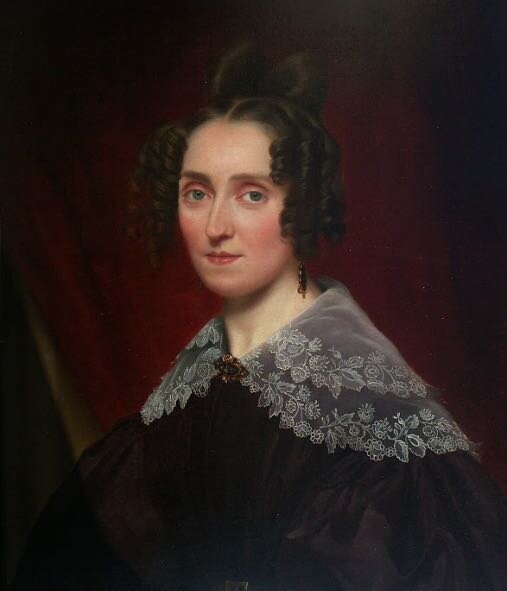
Louise Farrenc, however, composed music on a larger scale for performance in public venues. Symphonies and concert overtures for orchestra, quintets and trios for piano and strings, chamber music for winds, strings, and piano… she did it all! Farrenc also hosted big solo concerts each year to showcase her new compositions, filling Paris’s most prestigious concert halls. In 1850, her Nonet for (nine) wind and string soloists made a huge splash because it demonstrated her learned, sophisticated compositional style in a work that did not involve her instrument (the piano) and because she was able to get the most sought-after musicians in town to play on the premiere.
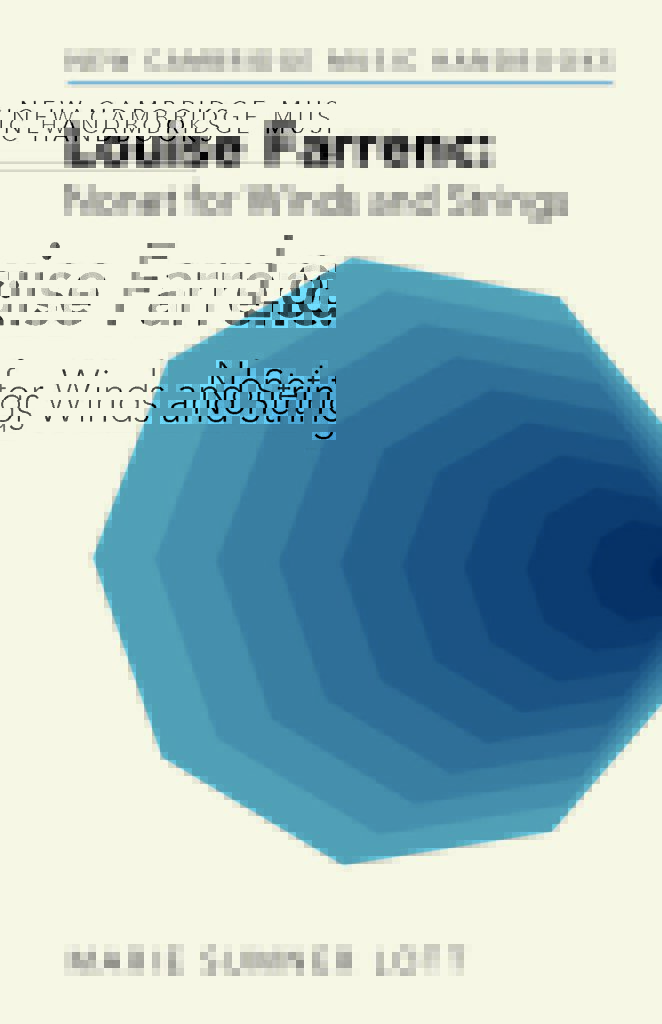
My New Cambridge Handbook devoted to this work explains how Farrenc used her professional and personal network of fellow musicians and patrons to create an audience for her serious chamber music at a time when women were expected to compose smaller-scaled, lighter, and less demanding pieces. Her Nonet represents the pinnacle of her compositional style: It is filled with sophisticated melodic and harmonic developments in innovative, Romantic movement structures, and it gives the individual players plenty of opportunities to show off their skill. The book provides context to help readers understand why listeners of the 19th century might have been surprised by this piece while also giving 21st-century listeners a guide to appreciate its many nuances and to delight in the surprises it still holds for us today.

Marie Sumner Lott is Associate Professor in the School of Music at Georgia State University. She is the author The Social Worlds of Nineteenth-Century Chamber Music (2015), which w...
View profile >Keep up with the latest from Cambridge University Press on our social media accounts.


Latest Comments
Have your say!