

Products and services

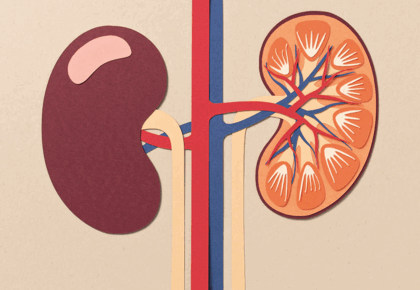
In the 1990s I had a “driveway moment.” Public radio had a story about conflict within the Organ Procurement and Transplantation Network (OPTN) over the geographic allocation of livers for transplantation. Congress has delegated responsibility for organ allocation rules to the OPTN, an organization of transplant centers, organ procurement organizations, and histocompatibility laboratories, rather than to a federal agency. After a little thought, it became clear that in the context of organ scarcity, this delegation of literally life and death decisions made it easier for legislators to avoid blame from constituents seeking more favorable rules. This arrangement for “stakeholder rulemaking” also provides a forum for the application of expertise, especially the tacit knowledge of practitioners, to the design of rules. Over the next twenty years I followed and wrote about the way this expertise influenced the largely incremental rule changes made by the OPTN. In 2018 the OPTN announced its intention to make a radical change to the structure of rules, switching from categorical allocation to continuous distribution.
Growing out of a network of voluntary sharing among transplant centers, the OPTN allocation rules were categorical in the sense of generally giving highest priority for organs to patients in hospitals in the same local area where the organ was donated, priority next to patients in the region, and finally to patients nationally. Beginning with the liver controversy in the 1990s, the OPTN steadily reduced the role of geography in allocation. However, it greatly expanded the use of other categories in allocation rules. For example, the 20 percent of patients with the longest predicted post-transplant survival from a kidney transplant receive the highest priority for the 20 percent of highest quality kidneys. Kidney and liver allocation rules had expanded to 132 and 367 categories, respectively. These categories created boundaries that many OPTN members viewed as both inefficient and unfair. For example, access to high quality kidneys was much greater for someone just below the 20 percent boundary than just above it. The multiple categories also made it difficult for patients to understand their priority and complicated the implementation of rule changes.
Continuous distribution establishes relevant patient attributes, such as waiting list and post-transplant survival, and weights the metrics used to quantify them to arrive at a single number that reflects the patient’s priority for the organ. The challenge facing the OPTN was to specify appropriate attributes, metrics, and weights for each of the transplant organs. Doing so requires expertise and the explicit consideration of values. It provides an unusual opportunity to study the interrelationship between evidence and values in organizational decision making.
OPTN rulemaking is extremely transparent. Organ-specific committees that take the lead in rule development hold open meetings, issue progress reports and proposals, consult with cross-cutting committees, such as those focusing on the interests of pediatric and minority patients, and obtain feedback from public comments and regional meetings. The switch to primarily virtual meetings because of the pandemic made it practical for me to observe over 100 committee meetings from 2021 through 2023.
During this period, the process for converting to continuous distribution was completed for lungs, nearly completed for kidneys and pancreases, and well underway for livers. As a student of public administration, I was able to assess the efforts made by the OPTN staff to launch the initiative and adapt it as experience was gained. For example, the OPTN contracted for application of the analytical hierarchical process (AHP), which surveyed members of the transplant community and the public to estimate the implicit weights they placed on the attributes for use in the continuous distribution of each organ. The quantitative results did influence the continuous distribution of lungs but became more important for the other organs as a way to elicit substantive comments from a broader public. A different pattern emerged for use of the optimization support provided by tools developed by MIT operations researchers using machine learning––limited use for lungs grew into much more extensive use for the other organs.
As a student of organizational processes, I had the opportunity rarely afforded to non-participants to observe the interplay between evidence and values in the committee deliberations over the metrics, their functional forms, and their weights for the different organs. The process tapped both the extensive explicit knowledge facilitated by the nearly universal longitudinal data on transplant candidates curated by the Scientific Registry of Transplant Recipients and the great variety of tacit knowledge gained by committee members through their experiences. The consideration of values was always explicit. Yet it could not be separated from predictions about what would result from the various metrics and their weights.
Overall, I am impressed with the capacity of stakeholder rulemaking to engage expertise and explicit consideration of values in the design of allocation rules. However, as I also discuss, it gives substantial influence to constituent organizations that contributed to the problem of large numbers of organ offers being rejected, a problem that I will address in a subsequent blog post.
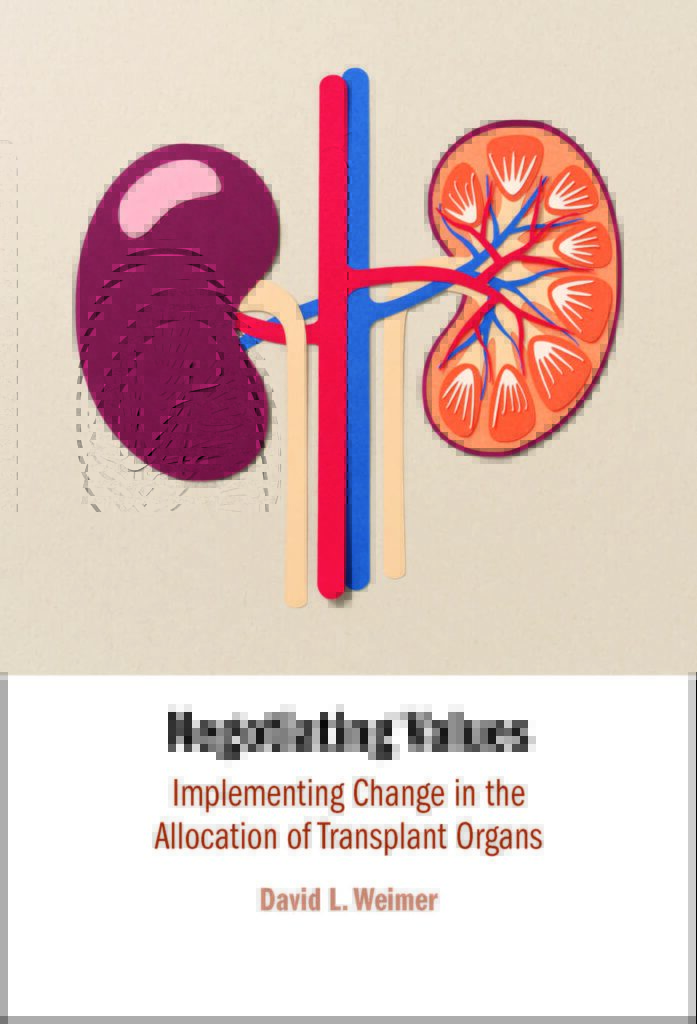

David L. Weimer is the Edwin E. Witte Professor of Political Economy at the University of Wisconsin, Madison. His contributions to public policy scholarship have been widely recogn...
View profile >Keep up with the latest from Cambridge University Press on our social media accounts.



Latest Comments
Have your say!