

Products and services


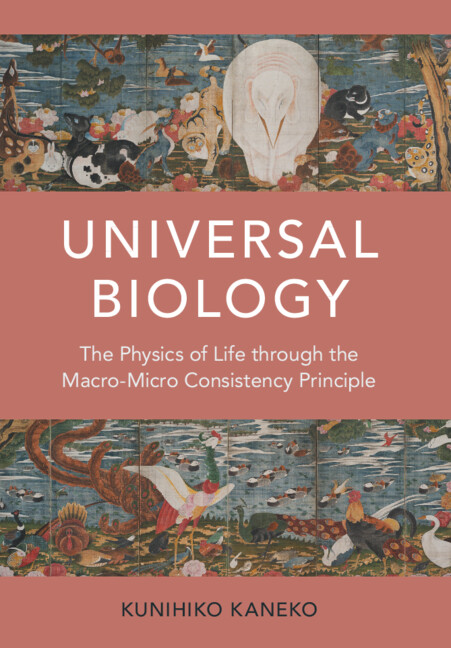
What is life, or are there universal properties of living systems? More than 80 years ago, Schrödinger published his seminal monograph What is Life? in which he predicted the nature of DNA as an information-carrying molecule and discussed the significance of the non-equilibrium nature of biological systems. This book was a physicist’s attempt to elucidate the universal nature of life and provided a major step towards the rise of molecular biology, through which the field has developed to uncover properties of molecules in living organisms. Despite decades of progress since Schrödinger’s work, the question remains open. In fact, the existence of specific molecules (say, nucleic acids or proteins) alone does not mean that an organism is alive. Rather, a living state is a macroscopic state, a collective of diverse molecules.
The question “what are the universal properties of the living state with such diverse components, and how can we understand them?” may seem quite difficult to answer. However, in the past, humankind succeeded in establishing thermodynamics, which captures the macroscopic nature of a system without reference to individual molecules. Can we then characterize a living state and extract universal properties and general laws therein? This is the question addressed in this book, by noting that living systems consist of diverse components that form a hierarchy, from molecules to cells, from cells to organisms, and to ecosystems. In the book, statistical laws governing cell growth and reproduction are explored, as well as generic mechanisms for adaptation through noise, kinetic memory, and robust cell differentiation through cell–cell interaction and epigenetics. In addition, the book reveals laws governing the rate, direction, and constraints of phenotypic evolution. These topics are explained through the macro–micro consistency principle: robust biological systems must satisfy certain relationships between microscopic units (e.g., molecules) and macroscopic states (e.g., cells), ensuring consistency between these levels. By integrating theoretical, modeling, and experimental approaches, this book offers novel insights into biology from a physicist’s perspective to reveal universality.
Chapter 1 provides a general discussion on how to understand life, and the possibility of developing a theory to unveil and formulate universal properties of living states, where robustness, plasticity, and activity are emphasized as essential to life. Recalling how thermodynamics has been successful in physics, the possibility of formulating a theory for characterizing universal properties in life is outlined. In particular, the phenomenology focusing on macro-level robustness at each level of the hierarchy, and the importance of macro–micro consistency, is noted.
In Chapter 2, six methodologies are presented: (1) macroscopic phenomenological theory based on robustness, (2) universal statistical laws at a microscopic level, (3) consequences and general laws derived from macro–micro consistency, (4) hierarchies with different time scales, (5) experimental approaches to uncover universal properties and laws, and (6) consequences of possible breakdowns of consistency. As an illustration, general statistical laws in gene expression, and changes in gene expression levels in response to environmental changes across all genes, are presented as consequences of macro–micro consistency, together with their experimental confirmations.
From Chapter 3, the methodology is applied to unveil basic biological properties of life. Chapter 3 is devoted to cell reproduction, Chapters 4 and 5 to adaptation and homeostasis, Chapter 6 to kinetic memory, Chapter 7 to cell differentiation and development, Chapter 8 to the relationship between phenotypic evolution and fluctuations, and Chapter 9 to constraints and direction as a consequence of evolutionary dimensional reduction. For each topic, macroscopic, microscopic, and macro–micro consistency across distinct space and time scales, as well as experimental approaches, are presented.
In Chapter 3, by noting that a cell contains enzymes that drastically accelerate equilibration processes, it is shown that a cell is an apparatus that reveals the non-equilibrium properties of the environment and accelerates equilibration. General statistical properties of cells are then presented, including the power law in abundances and the log-normal distribution of cell-to-cell variation. The transition from exponential growth to the dormant state (where cell growth is arrested) is shown to be a general consequence of the accumulation of waste (non-autocatalytic) components. Related experiments using single-cell measurements elucidate the distribution of variation in protein concentrations and growth rates. The relationship between minority molecules and genetic information, the separation of roles between genetic information and catalytic function, and other characteristics of protocells are discussed as universal properties that must be satisfied for all cell reproduction systems.
In Chapter 4, two basic characteristics of adaptation, plasticity and robustness, are discussed. It is shown that adaptation—i.e., the selection of an attractor with a higher growth rate—can occur without specific signaling circuits. Constructive experiments and simulations demonstrating such attractor selection are presented.
The other facet of adaptation, homeostasis, is discussed in Chapter 5. Dynamical system models that buffer external changes in a few variables to suppress changes in other variables are presented. From the simulation of a multi-component cell model, a critical state with power-law abundance is maintained as a homeostatic state even when environmental conditions are changed. Enzyme-limited competition is shown to lead to homeostasis of the period of oscillation in biological clocks against external perturbations.
Long-term cellular memory is investigated in Chapter 6. In contrast to digital memory understood as multistability, the possibility of analog kinetic memory is discussed. It is shown that kinetic memory with slow relaxation emerges as an alternative to conventional memories of multiple stable states. It is characterized by slow logarithmic change with several plateaus.
Chapter 7 is devoted to development, where cells sequentially lose their ability to differentiate into other cell types and become committed to different cellular states. This process can be described as a landscape in which valleys are canalized one by one. This canalization is understood in terms of dynamical systems of interacting cells. Differentiation by protein expression dynamics is further stabilized by feedback from epigenetic modifications, such as DNA modification. The irreversibly differentiated cell state can be reset to a pluripotent state by restoring an oscillatory state through forced expression of multiple genes from the outside, known experimentally as reprogramming.
Phenotypic changes by evolution are explored in Chapter 8. The variance of fluctuation in phenotype due to noise, termed Vip, is demonstrated to be proportional to the rate of phenotypic evolution, termed the evolutionary fluctuation–response relationship. It is then derived that Vip is proportional to Vg, the variance due to genetic variation, as a consequence of evolutionary robustness. Dynamic changes in phenotypic plasticity and evolvability are explored both in theory and in experiments.
Chapter 9 is devoted to evolutionary dimensional reduction. This is a process similar to the Le Chatelier principle of thermodynamics. Phenotypic changes due to environmental perturbations, noise, and genetic changes are constrained to a common low-dimensional manifold as a result of evolution. This is because the adapted state after evolution should be stable against a variety of perturbations, while phenotypes retain plasticity to change, in order to remain evolvable. To achieve this dimensional reduction, a few slow modes in phenotype dynamics become separated. The variance of phenotypes due to noise and mutation is proportional across all phenotypes, leading to predictability of phenotypic evolution.
Chapter 10 summarizes the concepts and methodology of the volume by emphasizing the relevance of macro–micro consistency, and then discusses ongoing research on the origin of life, hierarchy and functional differentiation in multicellular organisms, the relationship between developmental and evolutionary processes, and dynamic memory and learning in the brain from the standpoint of hierarchical consistency, and finally the mathematical framework needed to address the issues in this book.
All in all, fresh views of biology are presented from a physicist’s perspective to reveal universality.
The book is intended for graduate students, researchers, and motivated undergraduates in the fields of physics, biology, and mathematics who are interested in understanding life —what is life— in the spirit of physics. We hope that readers find this book both intellectually enriching and practically useful. Universal biology is a novel and growing field, and the integration of theory and experiment is increasingly essential. The book provides foundational topics, novel concepts, and universal laws in this exciting frontier.

Kunihiko Kaneko has been a Professor at the University of Tokyo for twenty-seven years, teaching mathematical biology and nonlinear dynamics, and he is currently at the Niels Bohr ...
View profile >Keep up with the latest from Cambridge University Press on our social media accounts.



Latest Comments
Have your say!