

Products and services

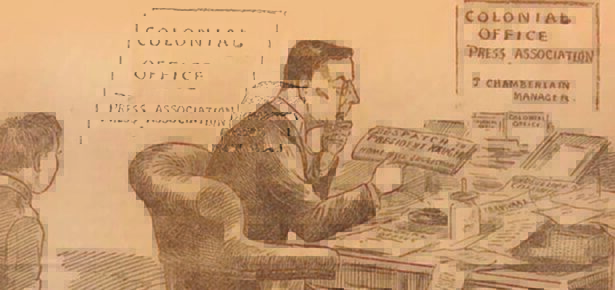
‘The powerful ruler is today unable to steer the press in his directions simply through his will. Words of command echo as empty calls in the empire of typesetting and rotation machines,’ observed the Fränkischer Kurier on 14 July 1906. When media celebrities-turned-politicians Donald Trump and Volodymyr Zelensky bring us live reality TV from the White House, we are witnessing modern media politics. But my research into millions of digitized newspapers from around 1900 reveals something surprising: the first generation of ‘publicity politicians’ emerged not in the age of Twitter, but in the age of the telegraph.
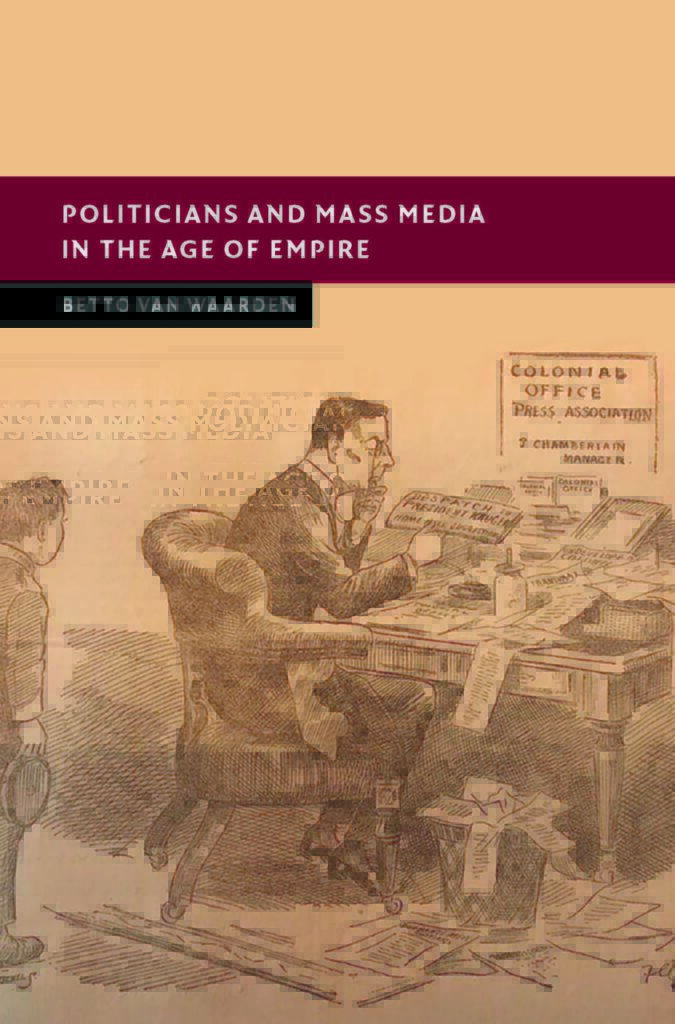
Two cartoons from that era capture the change. In ‘The New Statesmanship’ and ‘In the Editorial Office of “German Politics”’, The Westminster Gazette (18 Feb 1896) and Kladderadatsch (12 Apr 1908) pictured British Colonial Secretary Joseph Chamberlain and German Imperial Chancellor Bernhard von Bülow in their offices – not making policy, but managing the media. Chamberlain and Bülow thrived in a perfect storm of technological disruption, imperial expansion, and celebrity culture. But did democracy weather the storm?
Politicians as Journalists
Revolutions in communication technology coalesced with rapid urbanization and soaring literacy to make cities like London and Berlin into modern media metropolises by the dawn of the twentieth century. In this environment, Bülow and Chamberlain frantically followed the news. Bülow told a journalist in 1908 that ‘I also read many newspapers’ and ‘I consider the press a great power’, and he even instructed German embassies around the world to send him any news articles about himself. Both Bülow and Chamberlain collected albums with caricatures of themselves.
Yet they lost their grip on the press. The commercialization of media made newspapers less susceptible to government ‘subsidies’ for favourable coverage. Prosecuting journalists backfired, court cases generating only more attention for censored content. Politicians thus developed a new ‘will to publicity’. Chamberlain accommodated correspondents at the Colonial Office, personally providing them with live updates on the South African War. Bülow fêted journalists at the Imperial Chancellery – even bringing in a giant as an attraction for extra media attention – and praised their work at press forums. Politicians learned that personality sells better than policy, putting themselves in the spotlight and crafting their private lives for media imagery.
Bülow boasted of his journalistic talent. He claimed that, when he had been a diplomat in Paris in the 1880s, he had been offered 30,000 francs annually to work for The Times. Politicians began to think like journalists, incorporating the logic of the media into their politics. But, in doing so, they also let the genie out of the bottle – the speed and scale of modern media became uncontrollable. Addressing an international press congress in 1908, Bülow concluded: ‘When today a newspaper pins something onto a public man, it passes on like the electrical sparks along the telegraphy line, and before the person concerned finds the time to correct the matter properly, the image has cemented itself in the heads of a hundred thousand, even millions’. Defending Chamberlain in the House of Commons in 1896, Arthur Balfour had already warned: ‘It is not possible to feed the public appetite from week to week and day to day and hour to hour, and then suddenly say to the newspapers accustomed to this luxurious fare, “I am now going to put you on starvation allowance”’. A century later, Prime Minister Tony Blair would again complain of this insatiable ‘feral beast’ of the media.
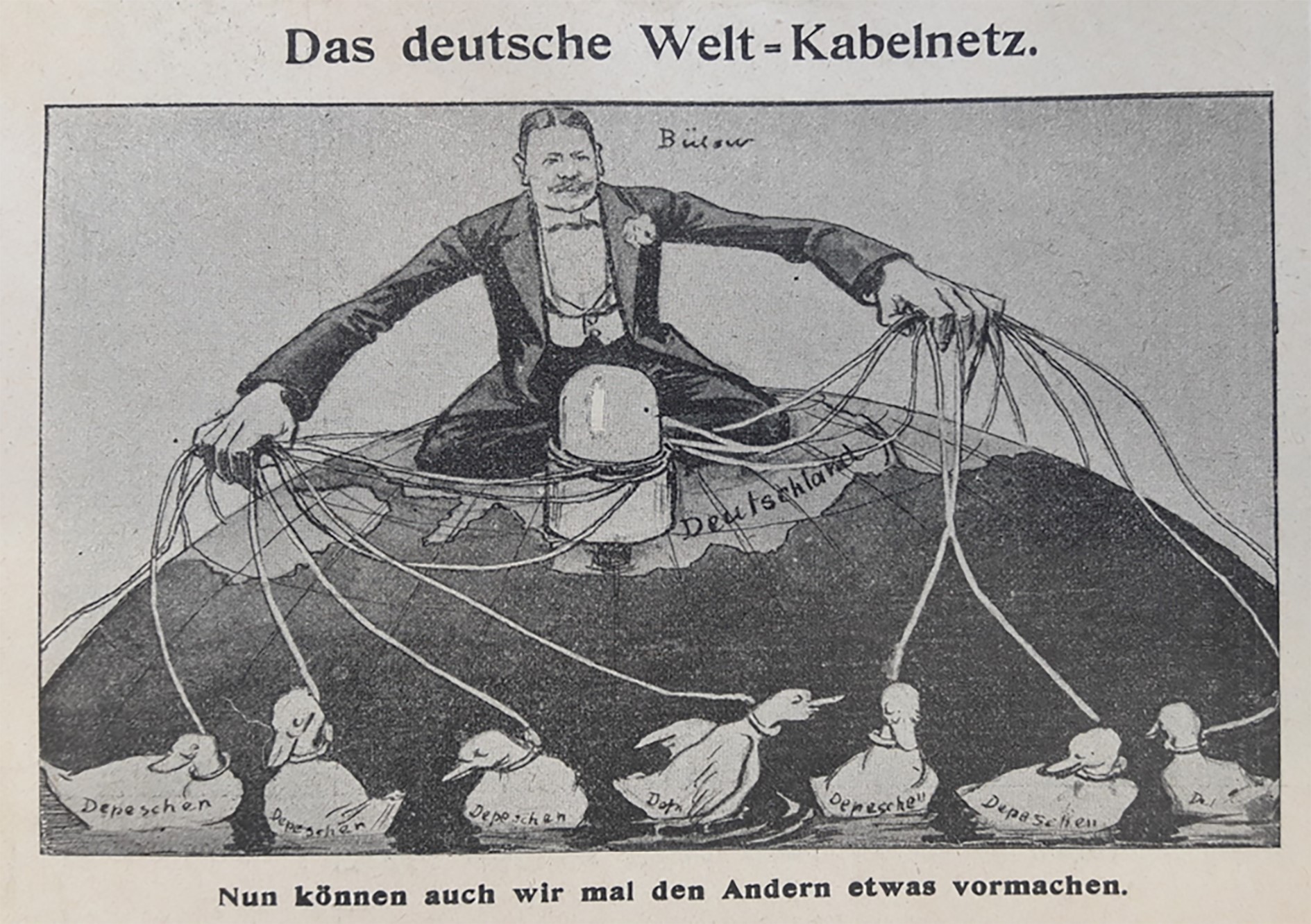
Figure 1: ‘The German World Cable Network’, Ulk, 1 February 1901.
Actors on a Global Stage
The age of High Imperialism before the First World War is known for its geographical colonization. But imperialism manifested itself in the expansion and conquest of not just the physical space, but the public sphere – it attracted not only colonial adventurers, but media-political entrepreneurs. While political roles were already established in national politics, imperial politics offered opportunities for political newcomers. With his infamous speech that the German Empire also deserved a ‘place in the sun’, Bülow forged a new Weltpolitik. Foregoing a traditionally prestigious department like the Exchequer or Home Office, Chamberlain consciously chose to head the Colonial Office for the global publicity it promised. The first colonial secretary to actually visit the colonies, Chamberlain was accompanied by an entourage of forty journalists on his nine-week, 5,000-mile train tour around Southern Africa in 1902-1903. This media circus paraded the British Empire – and notably Chamberlain – before the eyes of the world.
Imperial politics offered a global audience – making Bülow and Chamberlain international celebrities. In print, images, and early film, modern citizen-consumers followed the political trials and tribulations – and private lives – of their imperial leaders. But this media consumption went beyond celebrity culture. Celebrity politicians became symbols that enabled the mass public to make sense of international politics. Simplifying global trade, the Westminster Gazette (24 Jan 1896) portrayed Chamberlain as a travelling representative of Britain with a suitcase of ‘British Empire samples’, pushing past French and German representatives with their ‘French manufactures’ and ‘Made in Germany’. Simplifying global conflict, publications from Budapest to Chicago pictured Anglo-German tensions in the form of a boxing fight between Bülow and Chamberlain. Media turned imperial politics into a global show – performed by celebrity actors.
Publicity politicians in the age of empire understood that media politics was inherently transnational – a scandal in Berlin could affect stock prices in London and political debates in Washington. The problem was that politicians also exploited this interconnectedness. Over the course of several months in 1901-1902, Bülow and Chamberlain exchanged a series of insults, powering their own publicity but also endangering the peace between their empires. On 9 January 1902, the Vossische Zeitung wrote that Bülow ‘was bound to take into account the echo which his words would awaken in the English Press.’ A day later, The Times concluded that ‘If Count von Bülow’s speeches […] were not reported in the English Press his audience would at once be diminished at least a hundredfold. It is the best advertisement in the world, for the German Empire to be noticed, whether in friendly or in critical terms, by the Press of the English-speaking world.’ However, having fanned the flames, it was difficult for Bülow and Chamberlain to put out the fire.
Moreover, like the myth that conquered physical space had been uninhabited before – the terra nullius doctrine of colonialism – the public sphere had not been uninhabited either. A diversity of voices had existed across local public spheres – now threatened with being subsumed into a greater public sphere colonized by powerful publicity politicians…
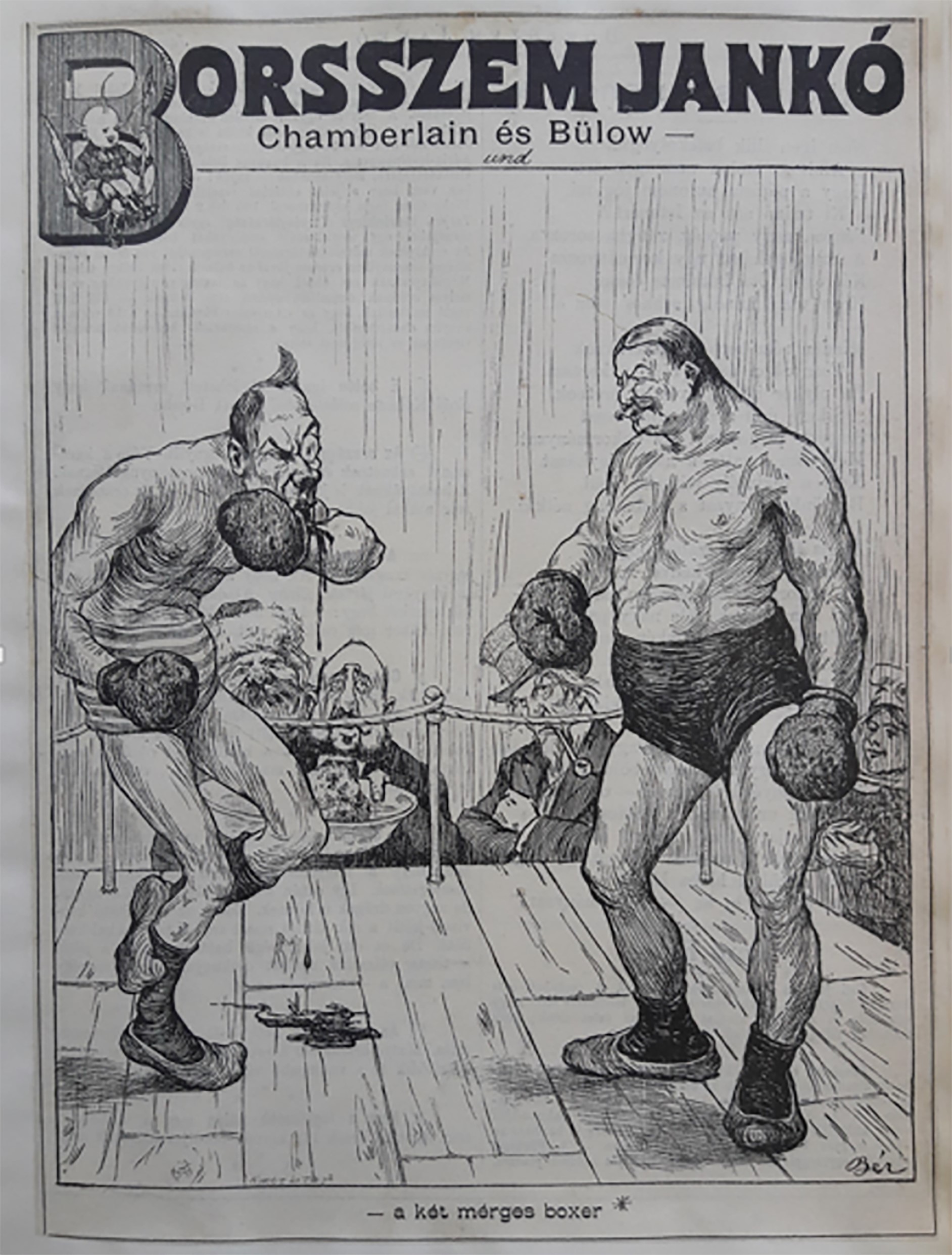
Figure 2: ‘Chamberlain and Bülow’, Borsszem Jankó, 19 January 1902.
A Paradox of Political Participation
Mass media democratized politics. The widespread coverage of politics in print and image – coupled with the expansion of voting rights – for the first time in history enabled the mass public to participate in politics. But media democratized not only this demand-side of the ‘consumers’ of politics, but also its supply-side of ‘producers’: the politicians. Until the late nineteenth century, politics had been a pastime for the privileged. Media visibility changed that. Neither Bülow nor Chamberlain were high-ranking aristocrats: Bülow emerged from the lower ranks of German nobility; Chamberlain was a screw manufacturer. Both paved a new path to power based on media popularity.
But these democratic leaders increasingly bypassed democratic institutions. Chamberlain bypassed the political parties: having built his own base on media popularity, Chamberlain’s maverick moves first split the Liberal Party in 1886 and then the Conservative Party in 1903. Bülow bypassed the parliament: during a strike of the parliamentary reporters, he refused to address the parliamentarians in the Reichstag – he only wanted to reach the people directly, not their elected representatives. The media acted as co-conspirator in this democratic backsliding: The Daily Telegraph wrote in 1896 that ‘Our modern Ariel, the “tricky spirit” of the wire, serves best a master like Prospero […] it is almost ludicrously unpractical to think of a Cabinet Council sitting round a green table to draft efficient telegraphic messages’ – modern media politics demanded an executive leader like Chamberlain, not democratic deliberation. Publicity politicians discovered they could use mass media to create what seemed like democratic legitimacy while actually undermining representative institutions.
Not only institutions were bypassed; so were a diversity of political issues and movements. Celebrity politics reinforced itself. Attention begot attention. The more the media covered Bülow and Chamberlain, the more well known they became, the more publicity they attracted. Publicity politicians monopolized the increasingly competitive attention economy, drowning out news of nascent social causes and movements. Democratization here carried within itself the seeds of its own demise.
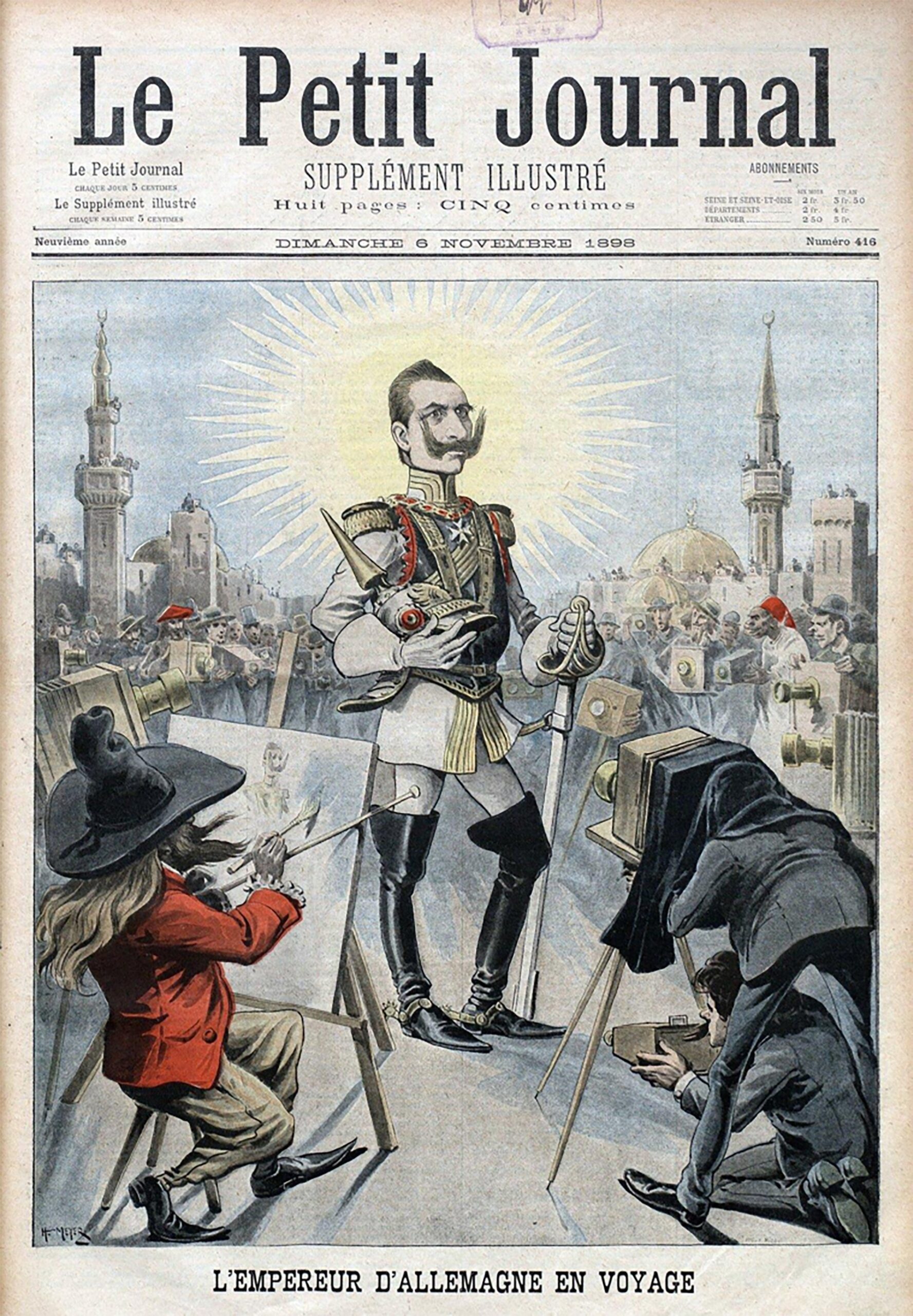
Figure 3: ‘The Emperor of Germany Travelling’, Petit Journal, 6 November 1898.
The Power and Peril of Publicity Politics
‘The smallest is the number of those politicians, who can bear that the press does not deal with them at all’, stated Bülow at the international press congress in 1908. Bülow and Chamberlain constituted the tip of an iceberg: a whole generation of publicity politicians – including Bülow’s imperial master, Kaiser Wilhelm II – emerged internationally around the turn of the twentieth century. In my new book, Politicians and Mass Media in the Age of Empire, I explore a moment when politics and publicity collided, reshaping both for a new era. When the lamps went out across Europe in 1914, the system of transnational media politics I document in the book fragmented. But the publicity politicians of 1900 established patterns of politics that persist today. Struggling with early information overload, fake news, and the acceleration of political time, they learned that attention is power, that personality trumps policy, and that media logic shapes political behaviour – lessons that remain relevant. Most importantly, the media’s paradox of political participation still haunts us today.
How do you think that mass media have helped or hindered democracy? Please react in the comments below.
Betto van Waarden’s new book Politicians and Mass Media in the Age of Empire is published by Cambridge University Press. Based on extensive research in digitized newspapers and archives across Europe, it uncovers the forgotten origins of our modern media politics.

Betto van Waarden is an Assistant Professor of History at Maastricht University. His research focuses on the relationship between media and politics in the nineteenth and twentieth...
View profile >Keep up with the latest from Cambridge University Press on our social media accounts.


Latest Comments
Have your say!