

Products and services

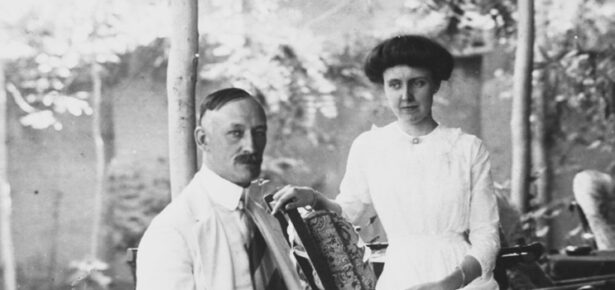
Historical rags to riches stories attract intrinsic interest. Nineteenth century social history is populated by men (mostly) driven by the self-improvement ethos who emerged from humble circumstances to relative wealth and status. They make persuasive illustrations for arguments about the rapid pace of social mobility in Victorian and Edwardian society. Two of the men in Love, Class and Empire illuminate the case vividly, but with a difference. William Cooper was born in the 1860s in poorest Bermondsey on the Thames south bank; his appointment as a telegram boy at the age of thirteen held the potential promise of better things to come, but that remained uncertain. Edgar Wilson, born in the 1870s to rural schoolteachers, began from marginal lower middle-class origins and his early white-collar employment promised little more than the restricted life and marginal income of a bank clerk.
For both these men the Middle East, mostly Persia, proved to be the catalyst which lifted them into middle-class managerial careers, enhancing their status along with their wealth beyond their expectations at home. Cooper became a telegraph clerk in various stations on the Persian Gulf in the 1880s, later a clerk-in-charge in Russian Georgia on the Black Sea and by 1909 he oversaw his company’s entire telegraph operations in Persia. Wilson moved from London to a shipping clerk position with a river steamship company on the Karun River, adjacent to the Persian Gulf, and by the 1920s was running the company.
Wilson’s and Cooper’s experiences bring some nuance to the debate engaging historians for over a century: whether the Empire was an overall benefit or drain to Britain. Notions of colonies as ‘millstones round our neck’, the penalties of colonial wars and costs of defending unstable frontiers posed challenges to those who defended the commercial benefits of global dominance and the export of ‘British stock’ around the world. A rarely acknowledged element in the debate is the benefit of overseas employment to a large, socially diverse, expatriate segment of the British population, quite distinct from the permanent experience of mass migration in settlement colonies. This was a global phenomenon but most evident in British India, where empire bureaucracy was a channel of advancement for successive generations of financially strapped working and lower middle-class aspirants, offering enhanced incomes and retirement pensions, and, for some, status, usually well above equivalent positions at home. The notion of ‘the empire at home’ a strong theme in empire historiography, included these returned expatriates, enriched by the fruits of empire and global commerce.
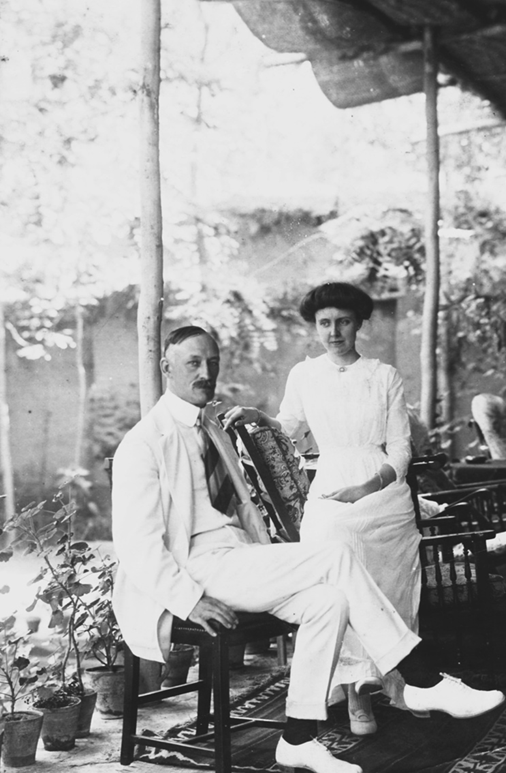
Turning away from India, Love, Class and Empire explores this terrain in a corner of the ‘informal empire’. The informal empire operated alongside more formal imperial structures, mostly the product of British global commerce which exerted various degrees of influence over local rulers. The best-known example, Argentina, accounted for huge proportions of British trade and capital investment, and hosted the second largest British expatriate population outside the formal Empire. By contrast, the Middle East beyond Egypt accounted for relatively small numbers of British expatriates, increasing from the early twentieth century with oil discoveries and the aftermath of war, when Britain exercised something approaching formal rule, temporarily, in the mandate states of Iraq and Palestine. Persia, later Iran, remained a sovereign, but weak state, where British and Russian empires contended for dominant influence, and it was here where Cooper’s and Wilson’s careers, along with their family lives, began to flourish.
Thanks to a bulky archive of family and business papers – mainly letters and diaries – housed in the British Library (the ‘Cooper and Wilson Papers’), we can trace the Cooper-Wilson mobile careers – mobile both socially and geographically – in detail. Their turbulent lives offer case studies in expatriate careers in the informal empire: for example, the death of a young wife and mother from typhoid in remote southwest Persia, management of telegraph offices under siege by revolutionaries in Tehran, early Persian oil exploration, defence of river shipping in wartime, celebration of the men’s careers by the Persian Shah and the two men’s contrasting modes of retirement in later life.
But the archive reveals much more. The families of these two men became united by marriage in Tehran in 1912, when the widowed Edgar Wilson married William Cooper’s twenty-year-old daughter, Winifred. Expatriate couples usually underwent the classic experience of living for years apart, wives caring for children in England while men remained at their overseas posts. For Edgar and Winifred Wilson a voluminous correspondence ensued, which yields rare insights into the nature of expatriate family life and marriage. Winifred was an expatriate from childhood, her education and social life flourishing between sites in the Russian Empire, London and Tehran. She enjoyed an unusual amount of freedom as a young girl, worked in various telegraph offices, and brought a spirit of independence and cosmopolitan sophistication to her marriage.
Winifred and Edgar’s marriage was a love match, poignantly illustrated in years of sexually explicit letters, which departed from the conventions of spousal correspondence and add to our understanding of middle-class marital sexuality in the early twentieth century. Most letters expanded on their mutual desire and contained joking though earnest references to their nicknamed private parts. Winifred in 1914 impatiently awaiting a reunion: ‘Trixie sends Dickie a long & loving embrace & says she is longing to join him in his glory!!! – or I should say “shorn of his glory”!!!!!’. Their risqué jokes, uninhibited sexual banter, and even spiritual associations with their playful sex life, pointed to an expatriate version of ‘companionate marriage’, a popular ideal in the 1920s which lauded heterosexual marriage as an equal partnership based on mutual sexual pleasure, friendship and romantic love, although without addressing the unequal division of labour through separate spheres.
Imperial History is now much preoccupied with identity transformation, how imperial ‘careerists’ helped to transform but were transformed themselves by the colonised spaces they occupied. Both Cooper and Wilson gradually acquired habits of authority and leadership, mediated by exposure to multicultural communities, for Cooper in Georgia and for both among the diplomatic elites of Tehran. But their authority rarely extended beyond command of their own staff and servants, the majority of whom were themselves British expatriates. While they subscribed to popular notions of the beneficence of British global supremacy, there was little trace of the pro-imperial arrogance associated with those who ruled over subject peoples. They acquired expatriate identities, ultimately proud of their exotic pasts, their Englishness mediated by cosmopolitanism. In contrasting versions of expatriate masculinity, Wilson did his duty abroad, and at times enjoyed it, but he yearned for the domesticated comforts of his ‘suburban nest’ in England, while Cooper, disrupting the family life, carried his expatriate identity after retirement into a refusal to settle and an addiction to serial wanderlust which ultimately proved fatal.
Expatriate identities were deeply gendered. Winifred Cooper shared much of her legacy of overseas life with her husband. Both subscribed to the notion of a ‘free and expansive existence’: a liberal version of Christianity, open to new experience, to culture and to love and uninhibited sexual expression within marriage. While they often asserted these principles in opposition to narrow and fundamentalist religious practices, they went beyond that to their own sense of identity as liberal and cosmopolitan-minded expatriates. For Winfred, though, there was something more. Expatriate living rocketed her from her parents’ working-class backgrounds to the status of young lady, enjoying all the trappings that came with mixing among diplomatic elites in Tehran. Indeed, her Tehran wedding resembled the grand spectacles of aristocratic ceremonies in Britain, far from the conventional middle-class wedding she might have expected at home. Her unconventional upbringing, with the greater freedoms of expatriate life, led to an equally unconventional existence in middle-class suburban St Albans from the 1920s. Her adherence to Evangelical Christianity and Conservative politics coexisted with support for the National Union of Women and birth control, heavily at odds with her support for the Mothers’ Union; she was a leader in what has come to be known as domestic, or maternal, feminism.
When I first encountered the Cooper and Wilson archive I expected it to provide some useful illustrative evidence for what was, at the time, my broader study of lower middle-class men and masculinity in late nineteenth and early twentieth century England. Instead, the Coopers and Wilsons set me onto a different path, culminating in Love, Class and Empire. Nor did I expect to find such a rich and intimate portrayal of the human drama of these engineers of empire and their expatriate lives. The archive opens a window into micro-histories and private lives within the larger macro-history contexts of geo-political conflict, global commerce, social change and gender politics, mostly played out in a corner of the informal empire. Similar family archives may have much still to offer to expand our understanding of expatriate life and identities in the late imperial era.
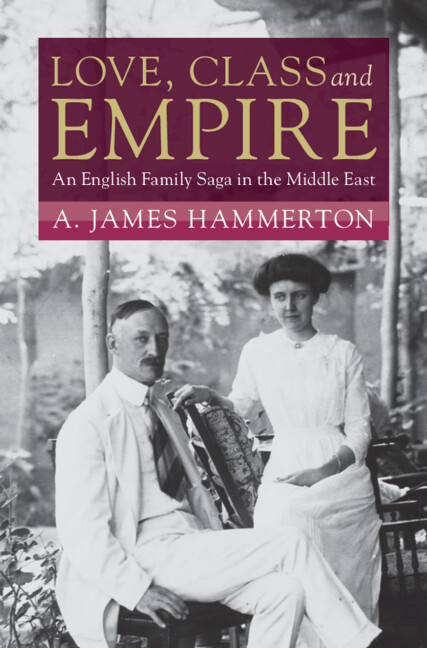

A. James Hammerton is Emeritus Scholar at La Trobe University, Melbourne. Previous book publications include: Migrants of the British Diaspora since the 1960s (2017), Ten Pound Pom...
View profile >Keep up with the latest from Cambridge University Press on our social media accounts.


Latest Comments
Have your say!