

Products and services


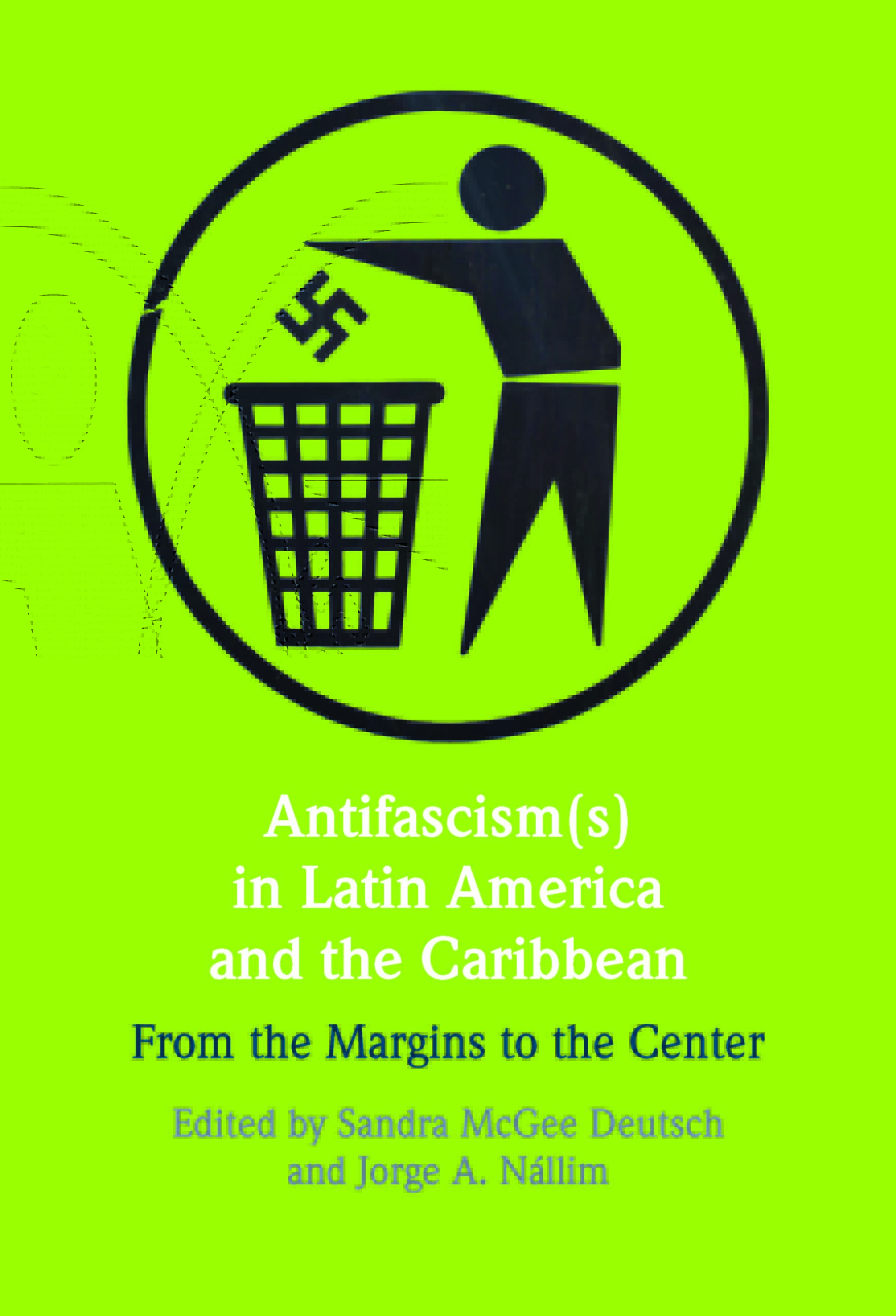
Why is our edited volume devoted exclusively to Latin America and the Caribbean, some might ask. After all, antifascism was born in Europe, and many scholars regard this continent as the main arena where it developed. They also have described Latin America as “peripheral” to Europe, the antifascist center. Until recently, writings on antifascism in Latin America usually focused on European exiles and refugees. Apparently confirming Latin America’s marginal status, they seemed to credit these European emigrés for bringing antifascism to this region and sustaining it there.
Lately, however, these attitudes have begun to change. Historians specializing in antifascist studies have turned their gaze toward the global south, writing on such places as India and other British colonies, South Africa, Syria and Lebanon, as in Kasper Braskén, Nigel Copsey and David Featherstone’s pioneering edited collection.[1] Some scholars have researched local antifascists in individual Latin American and Caribbean countries. Yet these works are largely unknown outside the nations in which they were published, except for Argentina, whose literature on this topic is the most plentiful and relatively well known. Nor is there a single volume offering an encompassing history of Latin American and Caribbean antifascisms.
Our desire to produce such a volume and contest the Eurocentric tendency in antifascist studies helped lead us to this project. In our co-edited book, we argue that Latin America and the Spanish Caribbean were not peripheral to a European core, nor did activists in this region simply copy European models. Instead, they refashioned them and added new ingredients to make antifascism fit the local context. As Joseph Fronczak noted in his magisterial book, “locals all over pulled antifascism out of its Italian particularity . . . [they] didn’t just enlarge the form, they transformed it. . . People in different places made it meaningful to them, and in doing so they changed its meaning.”[2] Thus, the “periphery” was actually the creative center of antifascism.
As one might expect, our individual trajectories also motivated us to compile this book. Throughout our careers, we have worked on fascism and antifascism, but we approach them from different perspectives. In Transformations and Crisis of Liberalism in Argentina, 1930-1955 (2012), Jorge A. Nállim analyzed fascist-influenced — if not downright fascist — radical rightist movements and the liberal antifascist intellectuals and politicians who opposed them. These liberal views formed the roots of anti-Peronism, as Nállim discussed in Transformations, several articles, and Las raíces del antiperonismo. Orígenes históricos e ideológicos (2014), in which he traced this liberal current back to the nineteenth century. Now he is engaged in two book projects. The first expands the analysis of antifascism from Argentina to the broader Latin American context. It deals with antifascists in Mexico, Chile, and Argentina who, after World War II, transitioned into the anti-Communist Congress for Cultural Freedom, covertly backed by the CIA as part of its Cold War efforts. His chapter in this edited collection treats Chilean and Argentine writers’ associations and their links to antifascism. The second project is a co-authored book on the production of memories in twentieth -century Argentina with David M.K. Sheinin (Trent University), in which fascism and antifascism also appear as playing an important role in the different shapes and moments in which the Argentine nation was imagined by different actors.
Sandra McGee Deutsch began her career exploring radical rightists and fascists in Counterrevolution in Argentina, 1900-1932 (1986); Las derechas: The Extreme Right in Argentina, Brazil, and Chile, 1890-1939 (1999); and Women of the Right: Comparisons and Interplay across Borders (2012), co-edited with Kathleen M. Blee. These works, along with many chapters and articles, dealt with how these multifaceted extremist groups emerged and evolved in response to changing historical contexts. At the same time, her research highlighted the relevance of the gendered dynamics that motivated their antifascist adversaries. Eventually, while researching Crossing Borders, Claiming a Nation: A History of Argentine Jewish Women, 1880-1955 (2010), she first encountered the group that became the subject of Gendering Antifascism: Women’s Activism in Argentina and the World, 1918-1947 (2023). Currently she is researching Argentine, Chilean, and Uruguayan antifascist movements, focusing on race and masculinity.
The title of our edited book [antifascism(s)] indicates that there was no one particular antifascist experience in Latin America. Antifascists had different political affiliations, ideas and means of expressing them, types of engagement, and gender, racial, and ethnic identities. They created multiple antifascisms, drawing upon local, regional, and transnational sources.
These activists were well acquainted with fascism and antifascism in Europe on their own, and did not have to rely on emigrés to tutor them—although Latin American activists certainly kept a fluid relationship with European emigrés in many cases. Moreover, transnational exchanges were not solely unidirectional, from Europe to Latin America. Latin Americans inaugurated exchanges with antifascists in Europe as well as with other antifascists in their region.
The nine book chapters cover a broad range of countries and topics. The countries include Argentina, Brazil, Uruguay, Chile, Mexico, Cuba, the Dominican Republic, Honduras, Guatemala, and Nicaragua. Art, literature, politics, memories, gender, race, and sexuality are among the topics. Just as Latin America was not marginal to antifascism, neither were the small nations of Central America and the Caribbean, nor the themes of women, gender, and sexuality. We feel privileged to have worked with contributors who are experts in these various areas of study; we have learned so much from them and we are grateful for their patience and hard work. If anything, this volume is a living proof of the value of collective works that bring together insightful perspectives and experiences that acquire a different and fuller meaning when put together. Three of the nine chapters focus on women, gender, and sexuality, and four others also treat these topics. Four chapters deal with Central America and/or the Spanish Caribbean. And rather than only focusing on the classical period of fascism-antifascism between the 1920s and the end of the Second World War, several chapters bring the analysis to forms and legacies of antifascism in the postwar period.
We asked our contributors to address the following issues that became the thematic guidelines for both individual chapters and the overall book:
What were the origins of antifascism in Latin America and the Caribbean? How did it evolve and transform over different decades? What impact did it have on their societies?
How did different groups, in different contexts, adopt/adapt antifascism, what did they mean by this term, and what purposes did it serve? We focus on locals (who may include immigrants and their descendants), rather than exiles or visitors, and on appropriations, re-significations, and transformations in local and regional contexts.
What roles did women, sexual dissidents, persons of African and Indigenous descent, and other minorities play in Latin American antifascist movements? What were their particular motives and goals?
What were the political, intellectual, solidarity, social, and ideological networks that antifascist groups participated in or helped create? In turn, how did these linkages and interactions operate across local, national, and international dimensions? What cultural forms and products did antifascists create and use? What was the role of art, literature, and photography in the construction of antifascist meanings and networks?
What legacies did antifascist activism of the 1920s-1945 leave for later mobilization and resistance during the Cold War or against right-wing populists and fascists today?
Lastly, every book is a product of its times, and nothing can be truer than this one. When we started working on this book, we never imagined the circumstances in which we would find ourselves when it would come out in print. With the spread of right-wing populism, which at the very least resembles fascism, across the globe, our volume is more relevant than ever. It explains how not only political or intellectual groups and leaders but also ordinary people in Latin America and the Spanish Caribbean have contested fascism and kindred groups at home and abroad in the past and present. At a moment when the tragic lessons and costs of twentieth-century fascism seem to have been forgotten or lost, it is important to learn from their efforts, which can help inform similar struggles elsewhere in this moment. This book can thus provide a sense of hope.
[1] Anti-Fascism in a Global Perspective: Transnational Networks, Exile Communities, and Radical Internationalism (London and New York: Routledge, 2021).
[2] Everything is Possible. Antifascism and the Left in the Age of Fascism (New Haven and London: Yale University Press, 2023), 106.

Sandra McGee Deutsch is Professor Emerita of History at the University of Texas at El Paso. She has authored multiple books on fascism and antifascism, including Las Derechas: The ...
View profile >Jorge A. Nállim is Professor of History at the University of Manitoba. He specializes in the political, cultural, and intellectual history of modern Latin America and Argentina. H...
View profile >Keep up with the latest from Cambridge University Press on our social media accounts.



Latest Comments
Have your say!