Number of articles per page:
-
Raymond Hickey
The New Cambridge History of the English Language represents a second edition of the original Cambridge history published in the 1990s. Much has happened in English historical linguistics in the last three decades and so it was felt that a new history should reflect these shifts in research evident in current historical studies. Specifically, the […]
Read More
-
E. K. Myerson
On Friday 9 June 1458, a pirate ship swerved and fired on two Bristolian trading boats as they passed the coast of Malta, on their return from the Levant. I found the event transcribed in a legal document. I could see the inky vessels with their lost signatures, the Katherine Sturmy and the Marie, trapped […]
Read More
-
Luis de la Peña, Ana María Cetto
As the International Year of Quantum Science and Technology 2025 marks one hundred years of modern, quantum mechanics this reflection invites readers to look beyond the theory’s extraordinary successes and to consider how we understand, teach, and carry it forward into its next century. When the United Nations proclaimed 2025 the International Year of Quantum […]
Read More
-
Mary Tone Rodgers, Jon Moen
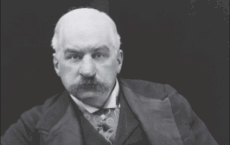
When financial crises strike, rescues and bailouts of distressed firms spark a familiar question: who really benefits? That same reservation arose long before the Federal Reserve, our lender of last resort, was founded. In the late 19th and early 20th centuries, when the United States had no central bank, J. P. Morgan—not a public institution—was […]
Read More
-
William R. Pinch
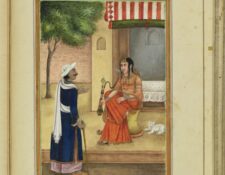
With these words Rudyard Kipling explained the Indian revolt against the British in 1857. Nearly a century after Kipling’s novel was published, Edward Said would draw attention to the necessary tendentiousness of Kipling’s depiction. Naturally the British would insist on an imperial understanding of the rebellion as a product of Indian madness (and how better […]
Read More
-
Christopher W. Churchill
Imagine a time when our best images of the universe were black and white photos. This is the year 1960. Forget about galaxy evolution theory, we didn’t even have mature ideas on how they came to exist. We had no idea how the universe evolved, nor how old it might be. As championed by Sir […]
Read More
-
Patricia H. Werhane, David J. Bevan
Moral imagination is a well-developed concept in business ethics, and one that is closely associated with Patricia Werhane, whose much-cited 1999 textbook argued that ethical failures often arise not from ill intent but from a failure to re-perceive situations, stakeholders, and systems beyond taken-for-granted mental models. What role should Moral Imagination play in managerial and corporate decision-making? It should expand […]
Read More
-
Samuel Gartland, Robin Osborne
In the early summer of 431 BCE, villages and farms in Attica were abandoned as people moved into Athens. They were fleeing the advance of one of the largest armies ever assembled in ancient Greece. At its head marched the Spartans, supported by a formidable array of allies. The Athenians crowded behind the city’s Long […]
Read More
-
Raymond Hickey
The New Cambridge History of the English Language represents a second edition of the original Cambridge history published in the 1990s. Much has happened in English historical linguistics in the last three decades and so it was felt that a new history should reflect these shifts in research evident in current historical studies. Specifically, the […]
Read More
-
E. K. Myerson
On Friday 9 June 1458, a pirate ship swerved and fired on two Bristolian trading boats as they passed the coast of Malta, on their return from the Levant. I found the event transcribed in a legal document. I could see the inky vessels with their lost signatures, the Katherine Sturmy and the Marie, trapped […]
Read More
-
Luis de la Peña, Ana María Cetto
As the International Year of Quantum Science and Technology 2025 marks one hundred years of modern, quantum mechanics this reflection invites readers to look beyond the theory’s extraordinary successes and to consider how we understand, teach, and carry it forward into its next century. When the United Nations proclaimed 2025 the International Year of Quantum […]
Read More
-
Mary Tone Rodgers, Jon Moen
When financial crises strike, rescues and bailouts of distressed firms spark a familiar question: who really benefits? That same reservation arose long before the Federal Reserve, our lender of last resort, was founded. In the late 19th and early 20th centuries, when the United States had no central bank, J. P. Morgan—not a public institution—was […]
Read More
-
William R. Pinch
With these words Rudyard Kipling explained the Indian revolt against the British in 1857. Nearly a century after Kipling’s novel was published, Edward Said would draw attention to the necessary tendentiousness of Kipling’s depiction. Naturally the British would insist on an imperial understanding of the rebellion as a product of Indian madness (and how better […]
Read More
-
Christopher W. Churchill
Imagine a time when our best images of the universe were black and white photos. This is the year 1960. Forget about galaxy evolution theory, we didn’t even have mature ideas on how they came to exist. We had no idea how the universe evolved, nor how old it might be. As championed by Sir […]
Read More
-
Patricia H. Werhane, David J. Bevan
Moral imagination is a well-developed concept in business ethics, and one that is closely associated with Patricia Werhane, whose much-cited 1999 textbook argued that ethical failures often arise not from ill intent but from a failure to re-perceive situations, stakeholders, and systems beyond taken-for-granted mental models. What role should Moral Imagination play in managerial and corporate decision-making? It should expand […]
Read More
-
Samuel Gartland, Robin Osborne
In the early summer of 431 BCE, villages and farms in Attica were abandoned as people moved into Athens. They were fleeing the advance of one of the largest armies ever assembled in ancient Greece. At its head marched the Spartans, supported by a formidable array of allies. The Athenians crowded behind the city’s Long […]
Read More
Number of articles per page: