Number of articles per page:
-
Karen Stollznow
The Euphemism Treadmill is common in the areas of language related to race and ethnicity, disease, and disability. What is this phenomenon? A euphemism is a word substituted for one that is considered unpleasant or embarrassing, which can be motivated by a desire to not offend. However, sometimes these good intentions can backfire. The so-called […]
Read More
-
Ronald Fricker
Stories help us understand and explain what we see in the world and they can be a powerful way of passing on knowledge. But misleading or incorrect stories can be confusing at best and harmful at worst. One story that is making the rounds today says that the number of COVID-19 cases is increasing only […]
Read More
-
Catherine Armstrong
Since the racist murder of George Floyd earlier this year, slavery’s remembrance and legacy is a topic of great significance in the contemporary world. The ongoing pain that slavery and racism causes for black people all over the world is palpable and often made worse by the refusal of those in positions of power to […]
Read More
-
Dániel Z. Kádár
In this blog we will discuss the complexities surrounding the use of particular expressions that are somewhat ‘heavy’ from the point of view of language use. In interactional ritual theory, these expressions are referred to as RFIEs. Many RFIEs are intrinsically interrelated with speech acts and their use helps us to indicate that certain ritualistic […]
Read More
-
Angela Wright, Dale Townshend
The invitation that we received to conceptualise and edit the multi-volume The Cambridge History of the Gothic in 2015 was both exciting and daunting: exciting insofar as it provided a unique and privileged opportunity to make crucial, field-defining interventions in the realm of Gothic Studies, yet daunting since, all practical and logistical considerations aside, we […]
Read More
-
Dániel Z. Kádár
Of the various speech acts used in the wake of COVID-19 and the corresponding need for social distancing, ‘Apologise’ is perhaps the most important. Since the enforcement of social distancing unavoidably leads to moral uproar, we often find ourselves apologising profusely for trying to safeguard our own health – an interesting paradox that can be […]
Read More
-
Anna P. Judson
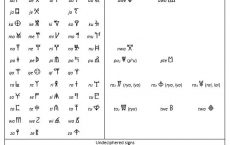
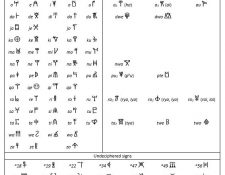
How can we study written signs that we can’t read? This is the central question of my forthcoming book, The Undeciphered Signs of Linear B: Interpretation and Scribal Practices. The Linear B writing system, used for administrative documents in Late Bronze Age Greece (c.1400-1200 BCE) was deciphered in 1952 by Michael Ventris, who showed that […]
Read More
-
Kirk Curnutt, Suzanne del Gizzo
Even in this strangest of summers, when social distancing leaves us feeling we’re living in suspended animation, the art of the dive can teach us about poise and exploration—the walk to the edge, the glance down into faraway water, the prickle of fear, the headlong leap, the thrill of hurtling through air, and, finally, the […]
Read More
-
Karen Stollznow
The Euphemism Treadmill is common in the areas of language related to race and ethnicity, disease, and disability. What is this phenomenon? A euphemism is a word substituted for one that is considered unpleasant or embarrassing, which can be motivated by a desire to not offend. However, sometimes these good intentions can backfire. The so-called […]
Read More
-
Ronald Fricker
Stories help us understand and explain what we see in the world and they can be a powerful way of passing on knowledge. But misleading or incorrect stories can be confusing at best and harmful at worst. One story that is making the rounds today says that the number of COVID-19 cases is increasing only […]
Read More
-
Catherine Armstrong
Since the racist murder of George Floyd earlier this year, slavery’s remembrance and legacy is a topic of great significance in the contemporary world. The ongoing pain that slavery and racism causes for black people all over the world is palpable and often made worse by the refusal of those in positions of power to […]
Read More
-
Dániel Z. Kádár
In this blog we will discuss the complexities surrounding the use of particular expressions that are somewhat ‘heavy’ from the point of view of language use. In interactional ritual theory, these expressions are referred to as RFIEs. Many RFIEs are intrinsically interrelated with speech acts and their use helps us to indicate that certain ritualistic […]
Read More
-
Angela Wright, Dale Townshend
The invitation that we received to conceptualise and edit the multi-volume The Cambridge History of the Gothic in 2015 was both exciting and daunting: exciting insofar as it provided a unique and privileged opportunity to make crucial, field-defining interventions in the realm of Gothic Studies, yet daunting since, all practical and logistical considerations aside, we […]
Read More
-
Dániel Z. Kádár
Of the various speech acts used in the wake of COVID-19 and the corresponding need for social distancing, ‘Apologise’ is perhaps the most important. Since the enforcement of social distancing unavoidably leads to moral uproar, we often find ourselves apologising profusely for trying to safeguard our own health – an interesting paradox that can be […]
Read More
-
Anna P. Judson
How can we study written signs that we can’t read? This is the central question of my forthcoming book, The Undeciphered Signs of Linear B: Interpretation and Scribal Practices. The Linear B writing system, used for administrative documents in Late Bronze Age Greece (c.1400-1200 BCE) was deciphered in 1952 by Michael Ventris, who showed that […]
Read More
-
Kirk Curnutt, Suzanne del Gizzo
Even in this strangest of summers, when social distancing leaves us feeling we’re living in suspended animation, the art of the dive can teach us about poise and exploration—the walk to the edge, the glance down into faraway water, the prickle of fear, the headlong leap, the thrill of hurtling through air, and, finally, the […]
Read More
Number of articles per page: