
Products and services

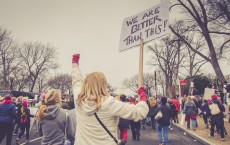
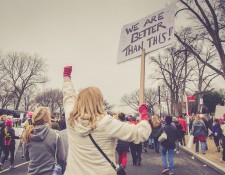
When I started writing Utopia and the Contemporary British Novel ten years ago, I could not have foreseen how relevant many of the book’s core concerns would become. Reeling from the global financial crisis, in 2009 we had not yet experienced the Occupy! Movement, the European migrants’ crisis, the 2016 Brexit referendum, the election of […]
Read More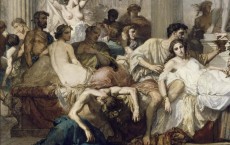
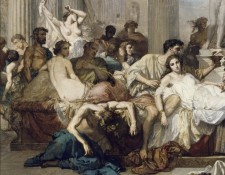
Decadence and Literature is a volume in the Cambridge Critical Concepts series whose larger purpose is not only to show how certain key terms in literary studies have originated and developed in the past but also to demonstrate how new applications of those terms can lead to original critical insights in the twenty-first century. ‘Decadence’ […]
Read More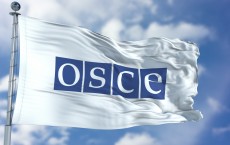
The Organization for Security and Co-operation in Europe (OSCE) brings together 57 participating states, including the USA and Russia, which makes it the world’s largest regional security organisation. Its mandate and policy fields are broadly defined, encompassing politico-military, economic, environmental and human aspects. Such a broad mandate enables the organisation to adopt policies in a […]
Read More
Working Wonders: How to Make the Impossible Happen puts forth the message that the difference between what’s possible and what’s not is, to a great extent, a construct of the human mind. And it’s one that we can change. I coined in this book the term possibilitivity, i.e. the propensity for perceiving insurmountable challenges as […]
Read More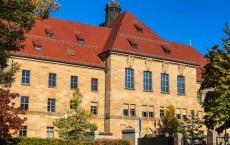
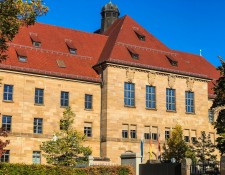
Cambridge Author, Marcos Zunino, talks about Transitional Justice and his new book - Justice Framed: A Genealogy of Transitional Justice.
Read More
Like most Americans, I encountered Sylvia Plath’s poetry before that of her husband, Ted Hughes, and I approached his work with some reluctance – as only seemed natural, considering his customary relegation to the role of villain in the story of Plath’s tragedy. I myself was a student and would-be poet at large in the […]
Read More
On Saturday 18th June 1910, the Women’s Social and Political Union staged one of its largest and most spectacular demonstrations. The Great Procession through the streets of central London was carefully choreographed and divided into numerous different ‘contingents’ – each representing a particular class or type of suffrage supporter. There was a special contingent for […]
Read More
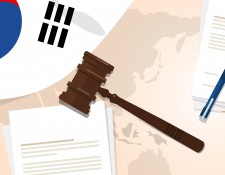
In our world, judicial independence is perennially contested. Threats from the political branch pose obstacles to judges’ ability to perform their constitutional duties. Marie Seong-Hak Kim talks about her title, Constitutional Transition and the Travail of Judges, and how this affects the freedom & liberty of the Korean people.
Read MoreKeep up with the latest from Cambridge University Press on our social media accounts.