Number of articles per page:
-
Robert H. Blackman
No past event gives us a perfect guide to understand current affairs. Nevertheless, we could do worse than use our shared past to help us think through the remarkable political changes Britain has experienced since the 2016 referendum on leaving the European Union. One event in particular shares much of the political drama Britain has […]
Read More
-
Noam Peleg
International children’s rights law, primarily the UN Convention on the Rights of the Child, which was adopted 30 years ago on 20 November 1989, dedicates much attention to facilitating the ability of children to grow up. The care for child development, as I argue in my new book The Child’s Right to Development, is embedded […]
Read More
-
William A Dyrness
While working on a book on the religious influences on Modern Art (Modern Art and the Life of a Culture [2016] co-author, Jonathan Anderson), I was struck by the widening scope of motifs sparking aesthetic treatment in the modern period. Where did this impulse come from? How did artists turn from the narrow range of […]
Read More
-
Mark Douglas
Increasingly, Christian pacifists are recognizing the need to attend to the violence of climate change. Thanks to books like Rob Nixon’s Slow Violence and the Environmentalism of the Poor and Kevin O’Brien’s The Violence of Climate Change, the links between climate change and violence are becoming more apparent and the need to respond to climate-shaped […]
Read More
-
R. Ward Holder
Context matters. Probably no historian can write a shorter sentence that defends our craft. This is true whether we speak in terms of politics, or about literature, or the law, or even the hard sciences. (Experiments work very differently in a vacuum than in the open air of one’s kitchen.) Knowing the world in which […]
Read More
-
Peter Liddel
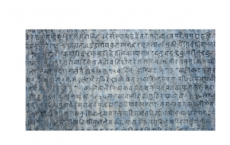
Decree-making is a defining aspect of ancient Greek political activity: it was the means by which city-state communities went about deciding to get things done. The Athenians in the fourth century BC distinguished between, on the one hand, laws (community-sanctioned rules with permanent and general application) and, on the other, decrees of the assembly (community-sponsored […]
Read More
-
Will Walker, Wendy Wagner
TMI (“too much information”), TLDR (“too long; didn’t read”), and DNC (“does not compute”). These acronyms offer painful reminders of our contemporary relationship with information. Many of us, particularly those in the legal field, face a steady stream of abstruse and over-complicated information: from convoluted contracts to wordy and confusing statutes and regulations. A superficial […]
Read More
-
Scott H. Decker, David C. Pyrooz
To most people, life in prison is a mystery. In a new study, we examine many aspects of prison life, with a special focus on the role of gangs. We interviewed 802 inmates in prison in Texas, half of whom were gang members. With 150,000 inmates, Texas is the largest state prison system in the […]
Read More
-
Robert H. Blackman
No past event gives us a perfect guide to understand current affairs. Nevertheless, we could do worse than use our shared past to help us think through the remarkable political changes Britain has experienced since the 2016 referendum on leaving the European Union. One event in particular shares much of the political drama Britain has […]
Read More
-
Noam Peleg
International children’s rights law, primarily the UN Convention on the Rights of the Child, which was adopted 30 years ago on 20 November 1989, dedicates much attention to facilitating the ability of children to grow up. The care for child development, as I argue in my new book The Child’s Right to Development, is embedded […]
Read More
-
William A Dyrness
While working on a book on the religious influences on Modern Art (Modern Art and the Life of a Culture [2016] co-author, Jonathan Anderson), I was struck by the widening scope of motifs sparking aesthetic treatment in the modern period. Where did this impulse come from? How did artists turn from the narrow range of […]
Read More
-
Mark Douglas
Increasingly, Christian pacifists are recognizing the need to attend to the violence of climate change. Thanks to books like Rob Nixon’s Slow Violence and the Environmentalism of the Poor and Kevin O’Brien’s The Violence of Climate Change, the links between climate change and violence are becoming more apparent and the need to respond to climate-shaped […]
Read More
-
R. Ward Holder
Context matters. Probably no historian can write a shorter sentence that defends our craft. This is true whether we speak in terms of politics, or about literature, or the law, or even the hard sciences. (Experiments work very differently in a vacuum than in the open air of one’s kitchen.) Knowing the world in which […]
Read More
-
Peter Liddel
Decree-making is a defining aspect of ancient Greek political activity: it was the means by which city-state communities went about deciding to get things done. The Athenians in the fourth century BC distinguished between, on the one hand, laws (community-sanctioned rules with permanent and general application) and, on the other, decrees of the assembly (community-sponsored […]
Read More
-
Will Walker, Wendy Wagner
TMI (“too much information”), TLDR (“too long; didn’t read”), and DNC (“does not compute”). These acronyms offer painful reminders of our contemporary relationship with information. Many of us, particularly those in the legal field, face a steady stream of abstruse and over-complicated information: from convoluted contracts to wordy and confusing statutes and regulations. A superficial […]
Read More
-
Scott H. Decker, David C. Pyrooz
To most people, life in prison is a mystery. In a new study, we examine many aspects of prison life, with a special focus on the role of gangs. We interviewed 802 inmates in prison in Texas, half of whom were gang members. With 150,000 inmates, Texas is the largest state prison system in the […]
Read More
Number of articles per page: