Products and services


Many today deplore the volume of negativity in political news. However, Stuart Soroka argues that it may not be as problematic as it seems--in fact, it may even be evidence of our generally positive outlook.
Read More
John Hedley Brooke, the author of Science and Religion, answers our questions about his latest book, how he writes, and researching the age-old conflict between scientific thought and religious belief.
Read More
Tom Ginsburg, the co-author of Constitutions in Authoritarian Regimes , breaks down the concept of "constitutions without constitutionalism" in dictatorships like North Korea and Mubarak's Egypt, outlining the different roles these constitutions can play for authoritarian rulers.
Read More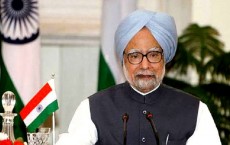
First published as an India in Transition article through the Center for the Advanced Study of India, University of Pennsylvania. With the Manmohan Singh Cabinet giving up on its planned ordinance binge, a constitutional heist has been avoided. Six ordinances, reports indicate, were under consideration. Some of these were anti-graft measures intended to shore up […]
Read More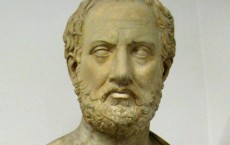
Geoffrey Hawthorn, author of Thucydides on Politics, discusses why reading Thucydides is essential to any study of modern politics.
Read More
As a follow up to his analysis of Hegel's Phenomenology of Spirit, Ludwig Siep, the author of Hegel's Phenomenology of Spirit, takes an in-depth look at Hegel's perspective on lordship and bondage in one of the Phenomenology's most famous chapters.
Read More
In Law and Identity in Colonial South Asia, Mitra Sharafi argues that rather than trying to maintain collective autonomy and integrity by avoiding interaction with the state, the Parsis sank deep into the colonial legal system itself. One way their unique identity was evident was in the cemeteries they dedicated for their dead.
Read More
Examining a Chinese production of Romeo and Juliet at this year's Hong Kong Arts Festival, Julie Sanders, the editor of The Cambridge Introduction to Early Modern Drama discusses the global phenomenon that is Shakespeare and his importance in modern culture.
Read MoreKeep up with the latest from Cambridge University Press on our social media accounts.