
Products and services


Marci Hamilton of the Cardozo School of Law has joined forces with the Stop Abuse Campaign to promote the passage of the Child Victims Act of New York (A02596) before the end of the state's session in June. A leading constitutional law scholar specializing in church/state issues, Hamilton sounds a clarion call for incest/family victims to organize in their push to raise awareness of the CVA. Her book, Justice Denied: What America Must Do To Protect Its Children, has proven a source of inspiration – providing a platform pushing to end arbitrary statutes of limitation for childhood sexual abuse, and allowing survivors past and present to have their day in court. Part of the problem, Hamilton argues, is the presence of formidable opponents to the bill – the insurance industry, the higher-ups of the Roman Catholic Church – as recently addressed in an editorial by the staff of the New York Times last Sunday. What does the bill actually say and where does the Times Editorial stand and how can you find out more on the Stop Abuse Campaign?
Read More
On Wednesday, President Obama hosted his second State Dinner at the White House, honoring Mexico’s President Felipe Calderón. Prior to the engagement, Obama and Calderón held a joint press availability to discuss the common issues shared by the neighboring countries. In addition to the highly controversial Arizona Immigration Law, the two leaders spoke of their mutual desire to confront and curb the violent influence of the drug cartels. President Obama spoke to this critical shared interest, stating: President Calderón and I also reaffirmed our commitment to stand together against the drug cartels that have unleashed horrific violence in so many communities. Mr. President, you and the Mexican people have shown great resolve in a fight for the security and safety of your country. And as I’ve pledged to you before, Mexico can count on the United States as a full partner in this effort. As your partner, we’ll give you the support you need to prevail. Through increased law enforcement on our side of the border, we’re putting unprecedented pressure on those who traffic in drugs, guns, and people. We’re working to stem the southbound flow of American guns and money, which is why, for the first time, we are now screening 100 percent of southbound rail cargo. And guided by our new National Drug Control Strategy, we’re bringing new approaches to reducing the demand for drugs in our country. ... I said the first time I met President Calderón and have said ever since that I greatly admire his courage, his dedication, his tenacity in trying to deal with the drug traffickers and cartels that have created such a public safety crisis in many communities within Mexico. (Read the full transcript of remarks by the President here.) Bruce Zagaris, author of the recently released International White Collar Crime: Cases and Materials, dissects one example of the crackdown on these cartels and shows the wide-ranging legal collaboration necessary to achieve a drug trafficking indictment. -------- Mexico Extradites Alleged Drug King Quintero-Payan to U.S. by Bruce Zagaris Via INTERNATIONAL ENFORCEMENT LAW REPORTER Volume 26, Issue 7, July 2010, p. 271 On April 23, 2010, the U.S. Attorney’s offices of Houston and San Antonio announced the extradition from Mexico of alleged drug kingpin Juan Jose Quintero-Payan, 68. Quintero-Payan contested extradition for eight years. Mexico extradited him to San Antonio to answer a four-count indictment alleging his responsibility for $20 million in various cash movements. Although he would be eligible for a life sentence, Mexico stipulated as part of the extradition order that he would not be sentenced to life imprisonment. The indictment alleges Quintero was the head of a criminal enterprise whose operations included South America, Mexico, the United States and the Cayman Islands during the years of approximately 1978 to 2002, when the superseding indictment was filed.
Read More
From Copenhagen to ClimateGate, the context and controversy surrounding any discussion of global warming has proven a significant handicap. This week, a group of distinguished climate scientists, economists, and policy experts published The Hartwell Paper - the outcome of a meeting convened by The London School of Economics. Fundamentally re-framing climate policy, these experts argue for a radical change in approach, insisting that progress in confronting climate change is now possible because of the epic failure of international cooperation on policy in 2009. (Contributors to the Paper include the Press's own Professor Mike Hulme - who had been featured prominently in the coverage of the ClimateGate scandal and is author of Why We Disagree About Climate Change.) The Hartwell Paper proposes a three-pronged approach in objectives: ensuring energy access for all; ensuring that we develop in a manner that does not undermine the essential functioning of the Earth system; ensuring that our societies are adequately equipped to withstand the risks and dangers that come from all the vagaries of climate, whatever their cause may be. Learn more about their thesis on the LSE's homepage here. Delving into the discussion, Cambridge author Bjorn Lomborg aligns their findings with his own approach to climate change on The Project Syndicate. -------- TALKING SENSE ABOUT GLOBAL WARMING Bjorn Lomborg LONDON - In February, 14 distinguished climate scientists, economists, and policy experts came together to discuss how to tackle global warming. This week, the London School of Economics and Oxford University are publishing their conclusions. They are worth considering.
Read More
The Gulf oil spill and the West Virginia mine explosion are two of the biggest tragedies in our recent history. Isn’t it interesting, then, that they share one highly combustible causal factor? Craig Collins, author of Toxic Loopholes: Failures and Future Prospects for Environmental Law, points to methane gas – from its incendiary role in the BP oil spill and the Massey mine explosion to its latent potential for wreaking further havoc. While the slow-moving mass of oil reaches our shores, with new ever-escalating estimates of the gallons spilled being announced, Collins reminds us of the lesser recognized hazards of methane gas and the further damage it can cause. -------- The Grim Reaper of Greenhouse Gases By Craig Collins, Ph.D. California State University East Bay, Environmental Law & Policy Although carbon dioxide is the most talked-about greenhouse gas, we ignore methane at our peril because it may prove to be the deadliest greenhouse gas of all. Unlike CO2, methane is flammable.
Read More
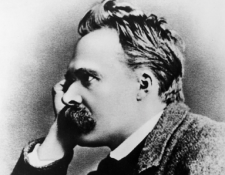
‘Friedrich Nietzsche: A Philosophical Biography‘ by Julian Young in The New York Times Book Review: Whether we acknowledge it or not, we continue to live within the intellectual shadow cast by Nietzsche. Postmodernism, deconstructionism, cultural relativism, the “free spirit” scorning bourgeois morality, even New Age festivals like Burning Man can all ultimately be traced to […]
Read More
First published in 1486–7, the Malleus Maleficarum (Latin for “The Hammer of Witches”) is the standard medieval text on witchcraft. A famous treatise, it attempted to systematically define and describe forms of witchcraft and its remedies—providing a counter to those who might deny the ‘reality’ of witchcraft and assistance to those judges who might need more information on how to prosecute it. In short: a fascinating handbook for your everyday Late Medieval European witch-hunter. Written by Heinrich Kramer, an Inquisitor of the Catholic Church, it remained in print throughout the early modern period. Last year, Cambridge’s Christopher Mackay translated an accurate version of the manual – the only complete English version available, and the most reliable. THIS WEEKEND, Mackay will be featured on the National Geographic channel’s program about books used to hunt and try witches. Check it out! For the first time ever, an international investigation team joins forces to unravel the mysteries of the Malleus Maleficarum, or Hammer of Witches. Written in 1486, this infamous medieval manual changed the way the Western world saw evil. With detailed instructions on how to find, prosecute and punish witches, the Malleus inspired centuries of accusation and bloodshed on both sides of the Atlantic. And – just for a teaser – revisit the Boston Globe’s interview with Mackay last spring... -------- Q&A: Christopher Mackay: A user’s guide to witches Boston Globe, 8/2/09 Harry Potter should be glad he practices his wizarding in the modern world. European sorcerers had a much less pleasant time of things in 1486, when the Malleus Maleficarum - “The Hammer of Witches” - was first published. The lengthy tome was medieval Europe’s definitive guide to recognizing and prosecuting witchcraft, the justification for a wave of burnings-at-the-stake - largely of peasant women - that took place from the late 1400s to about 1520. And it helped spread the paranoid notion of a vast satanic conspiracy: a world where demons roamed freely, enticing women to cast spells, kill babies, interfere with procreation, and try to delay the fast-approaching End Times. (At the time, many thought the Earth’s sell-by date was 1535.) Written largely by a Dominican friar from Germany named Henricus Institoris, republished broadly in its day, the Malleus was last translated from Latin to English in the 1920s. This month Cambridge University Press published a modern translation in a one-volume paperback, “The Hammer of Witches.” We spoke to the translator, Christopher Mackay, a professor of history and classics at the University of Alberta. Ideas: One thing that occurred to me, reading this book, is that human nature hasn’t changed much in 450 years. Mackay: The thing that I find most relevant to today is how you view the world around you. You see what you think you’ll see and you don’t see what you don’t think you’ll see. On “CSI,” Grissom says that the facts speak for themselves, but the facts don’t speak for themselves. It’s how you interpret the facts. [Institoris] talks about things like, you can stick a knife into a beam into your barn and you pretend to milk it, and through some razzmatazz you steal the milk from your neighbor’s cow. This is what people really thought. Onto that kind of stuff, he wants to impose this notion of this sect of heretics who are presided over by Satan.
Read More
Robert E. McGlone, author of John Brown’s War Against Slavery, was a finalist for this year’s Lincoln Prize! Listen to his musings on “The Public Eye” with Al Vuona…
Read More
We are defined by our preferences. But how do we arrive at those preferences, and how do we get what we want? Rachel Karniol, author of Social Development as Preference Management: How Infants, Children, and Parents Get What They Want from One Another, gives a glimpse into the power dynamics between children and parents - and the complex process of negotiation that goes into expressing one's wishes.
Read MoreKeep up with the latest from Cambridge University Press on our social media accounts.