

Products and services


What will become of those currently experiencing the wars we see in the media? Take the wars in Ukraine, Gaza/Israel and Sudan, for example. Will the children be permanently scarred into adulthood, and will the communities be too?
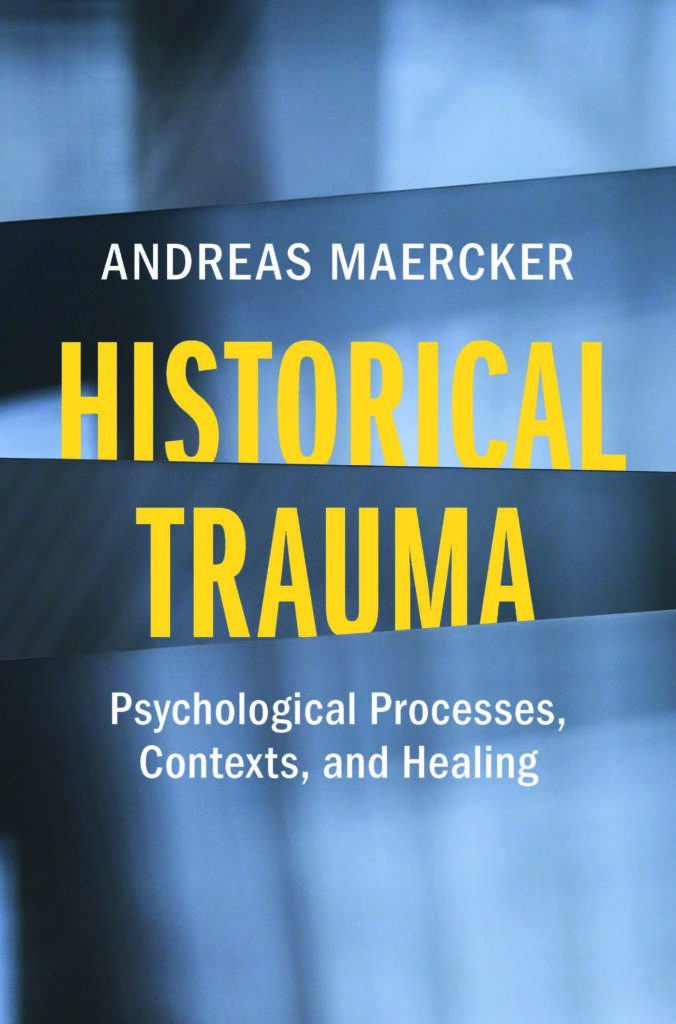
My book Historical Trauma: Psychological Processes, Contexts, and Healing collects evidence from psychology and the social sciences to answer these questions. This is because I focus on past collective traumas. Some of these traumas are 150 years old, such as the final disenfranchisement of Native Americans, while others are 80 years old, such as the consequences of the Holocaust, Stalinism, or the partition of India. The findings of scientific research in these areas can also be applied to current mass violence traumas.
As the author, I am also a person affected by these issues. Almost 40 years ago, I experienced the repressive side of post-Stalinism in the communist GDR (East Germany), spending ten months as one of approximately 60,000 political prisoners (fortunately with almost no direct danger to my life as so many fellow prrisoners in the 1950’s). However, this book does not examine individual fates, but rather the broader picture of the mentalities of affected groups.
With this book, I am venturing into historical territory. I am aware of the dangers of doing so. Can we say anything meaningful about the mentalities that emerged 150 years ago, following the final battles between American indigenous peoples and US settlers? This book does not offer any hasty generalizations. I am pleased that, in his blurb on the cover, Harvard historian David Armitage writes that the book makes an important contribution to the definition of terms.
In Central Europe, for instance, some historians and political scientists (including Herfried Münkler) are discussing whether the ultra-long-term consequences of the Thirty Years’ War can still be identified. In social science terms, this could be examined through the different levels of prosperity in areas that were severely affected at the time and those that were not. I only touch on this question in the final chapter of the book, leaving it for others to explore further. However, I would like to encourage further research into this and many other questions, such as – measurable – effect of visits to memorial sites like Auschwitz. I also hope that my colleagues in the fields of clinical psychology, psychotherapy and psychotraumatology will find it provides sufficient food for thought for their practical work.

Andreas Maercker is Full Professor and Head of the Psychopathology Division in the Department of Psychology at the University of Zurich, Switzerland. Professor Maercker has been an...
View profile >Keep up with the latest from Cambridge University Press on our social media accounts.


Latest Comments
Have your say!