

Products and services

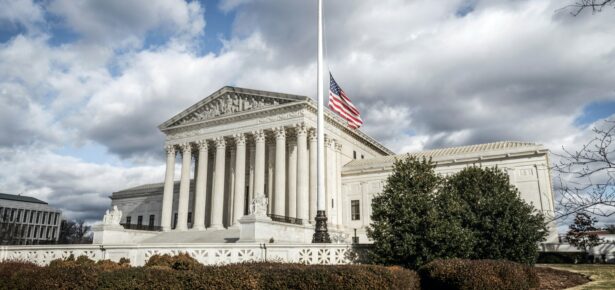
In People v. The Court, I argue that American democracy is broken and that the Supreme Court’s constitutional doctrine is a key factor contributing to democratic decay. The book charts a path for revolutionary changes in constitutional law that could help repair our broken democracy.
The Supreme Court has developed a set of constitutional doctrines that are antithetical to core constitutional values. One of the main ideas at the heart of our constitutional order is the principle of democratic self-government. In plain English, the Constitution is designed to ensure that We the People govern ourselves through our elected representatives. Unfortunately, the Court has developed a set of constitutional doctrines that erode the quality of democratic self-government.
The Court divides constitutional doctrine into rights issues and structural issues. From a structural perspective, the Constitution is designed to divide power between the government and the people in order to preserve the power of We the People to exercise control over our government. But the Court’s structural constitutional doctrine focuses exclusively on the division of power between and among government actors. The Court’s doctrine ignores the Constitution’s structural division of power between the government and the people. Viewed through the lens of the Court’s structural constitutional doctrine, We the People are invisible.
From a rights perspective, the Constitution is best understood to grant We the People an affirmative, collective right to exercise control over our government—primarily, but not exclusively, through the electoral process. However, the Court’s rights doctrines focus exclusively on negative, individual rights. Supreme Court doctrine related to constitutional rights tacitly assumes that the Constitution does not protect any affirmative, collective rights. That assumption is impossible to square with the Constitution’s commitment to the principle of democratic self-government. If that principle means anything at all, it means that We the People have an affirmative, collective right to exercise control over our government through our elected representatives—a right that the Supreme Court refuses to recognize.
In a properly functioning democratic system, candidates would compete for the votes of median voters in an effort to win elections. In the United States today, though, very few seats are competitive. For example, according to Cook Political Report, as of February 2024, only about 10 percent of seats in the U.S. House of Representatives were competitive in the 2024 election. The other 90 percent of seats were safe seats, where the only meaningful electoral competition occurred in primary elections. The predominance of safe seats over competitive seats undermines the collective right of American citizens to maintain control over our government. People v. The Court explains how the Court’s constitutional jurisprudence exacerbates this problem and how revolutionary changes in constitutional doctrine could help mitigate the problem.
In a properly functioning democratic system, truth would prevail over lies in the marketplace of ideas. Unfortunately, the Court’s libertarian First Amendment doctrine—combined with modern information technology—virtually guarantees that lies prevail over truth in the information marketplace. The problem is especially harmful when it comes to election-related information. The abuse of sophisticated technology to disseminate election-related misinformation to tens of millions of Americans is subverting our system of democratic self-government. The Court’s misguided First Amendment doctrine exacerbates the problem. People v. The Court proposes revolutionary changes in First Amendment doctrine that are designed to ensure that constitutional law becomes part of the solution, instead of being part of the problem.
The Constitution divides power between the federal government and the states. Since its 1995 decision in United States v. Lopez, the Supreme Court has developed a set of so-called “federalism” doctrines whose ostensible purpose is to limit federal power and return power to the states. In fact, though, those doctrines have had almost no practical effect in constraining federal power. Instead, the primary practical effect of the Court’s federalism doctrines has been to transfer federal lawmaking power from elected legislators to unelected, unaccountable judges. By transferring power to unelected judges, the Court’s so-called federalism doctrines subvert the power of We the People to exercise control over our government. People v. The Court urges future Supreme Court Justices to return power to our elected representatives in Congress by repudiating most (but not all) of the federalism doctrines that the Court has developed since Lopez.
The Court’s incorporation doctrine imposes unwarranted constraints on state autonomy by transferring legislative power from state legislatures to federal courts. The Warren Court first developed incorporation doctrine in the 1960s. The modern, conservative Supreme Court has repudiated much of the Warren Court’s jurisprudence, but it has doubled down on incorporation doctrine, thereby augmenting its own power to impose judicially created constraints on state legislatures in areas (such as gun control regulation) that were previously reserved to the states under the Tenth Amendment. People v. The Court urges future Supreme Court Justices to return power to state legislatures—who are accountable to voters—by repudiating incorporation doctrine, subject to narrow exceptions.
Both liberals and conservatives believe that incorporation doctrine is necessary to enable federal courts to perform their mission of protecting individual rights. People v. The Court explains why that view is mistaken. For the first hundred years of U.S. constitutional history, the Supreme Court relied primarily on treaties, statutes, and common law—but rarely constitutional law—to protect individual rights from government infringement. If Congress enacts appropriate legislation, the Court could adopt a similar approach today by applying international human rights treaties to protect individual rights from government infringement.
Judicial enforcement of human rights treaties—as a substitute for constitutional litigation—would offer judicial protection for individual rights that is comparable to, and in many cases better than, the level of rights protection currently achieved through constitutional litigation. Moreover, judicial decisions based on human treaties are subject to legislative override by Congress, whereas judicial decisions based on the Bill of Rights are not subject to legislative override. Restoring the possibility of legislative override is necessary to ensure that final decision-making authority on contested public policy issues (such as the right to gay marriage) is vested in the peoples’ elected representatives, not unelected, unaccountable judges.
People v. The Court explains and defends in greater detail the proposed changes summarized in this essay: changes related to election law, First Amendment doctrine, federalism doctrines, incorporation doctrine, and judicial enforcement of human rights treaties. Viewed in the aggregate, those changes would involve a genuine revolution in constitutional law. The final chapter of the book outlines a realistic path forward, including a legislative proposal for Supreme Court reform, to implement the proposed changes. The revolutionary changes I advocate are necessary to restore the proper division of power between the government and the people, and to enable We the People to reclaim our collective constitutional right to exercise effective control over our government.
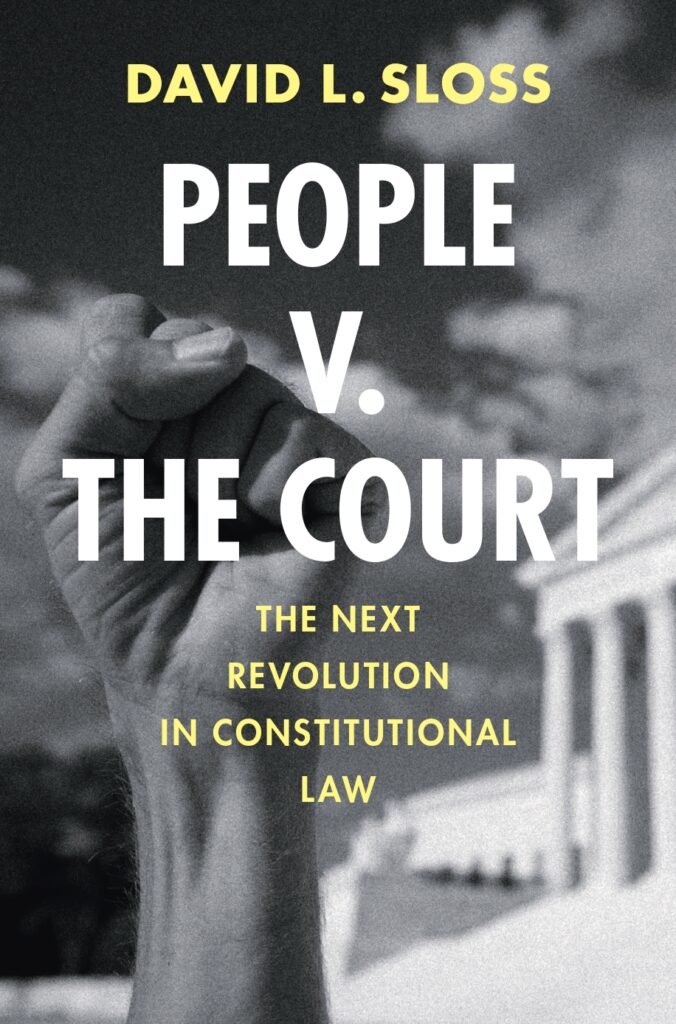

David L. Sloss is the John A. and Elizabeth H. Sutro Professor of Law at Santa Clara University....
View profile >Keep up with the latest from Cambridge University Press on our social media accounts.




Latest Comments
Have your say!